

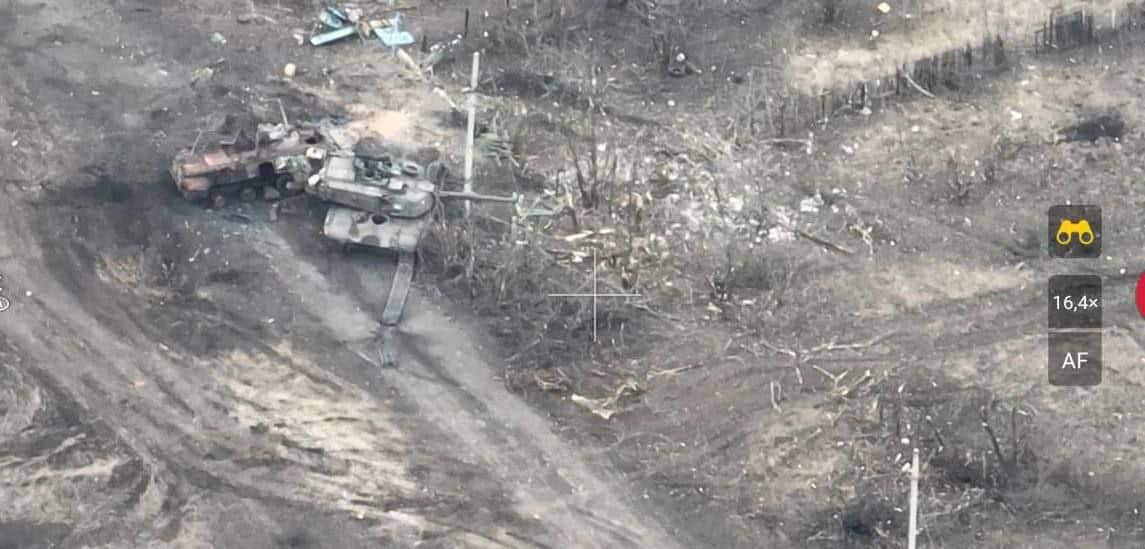
Since the beginning of the Russian offensive against Ukraine, the Western press has regularly made headlines about the "extraordinary" performance of American and European equipment delivered to Kyiv. Here, it was the Patriot batteries, celebrated for having intercepted Russian Kinzhal so-called "hypersonic" missiles above the capital; there, it was the HIMARS rocket launchers, presented as the miracle weapon decimating the mechanized columns of the invader caught off guard.
In the same vein, the now famous CAESAR cannon has become a real media star, to the point of being described as " nightmare of Russian gunners » — a qualifier which earned the corresponding article in Meta-Defense the distinction of being the most read in its history.
Rarely, however, were the underperformances of this same equipment highlighted. And even when this happened, the temptation remained strong to attribute the responsibility to the lack of training or tactical rigor of the Ukrainian forces, rather than to the intrinsic limitations of equipment presented as the most advanced in the world. Kyiv itself has long preferred to keep quiet about these difficulties, anxious to preserve the vital flow of weapons, munitions, and credits from Washington and European capitals: better an underperforming system than a complete absence of one.
But in recent months, this metaphorical construct has begun to crack. The rave reports about the supposed revolutionary capabilities of Western systems, widely reported in 2022 and 2023, are gradually giving way to other, much more confidential and, above all, significantly more worrying analyses.
Indeed, faced with a war that is constantly evolving, and two adversaries—Moscow and Kyiv—who have perfectly understood that their survival depends on their adaptability, Western equipment is showing its weaknesses. Too sophisticated, too slow to evolve, it struggles to maintain an operational advantage. Sometimes, the technology that was so expected proves to be a severe handicap on the front lines.
Summary
US weapons underperformance in Ukraine
As early as 2023–2024, several internal Ukrainian assessments and open reports documented a notable degradation in the performance of a range of Western weapons in the face of Russian adaptation—primarily electronic warfare (EW) and burst saturation.
Access the full analysis
This article is reserved for MetaDefense subscribers. A subscription gives you access to all analyses, reports, and insights published on the site.
No commitment. From €1,99.

