

Russian hypersonic weapons such as the Avangard, Kinzhal, Zircon, and Oreshnik are central to a strategy of power projection and repeated use in Ukraine. Following massive missile launches on March 7, 2026, and the overflight of Kinzhal-armed MiG-31Is over the Sea of Japan on March 17, Moscow announced a target of 1,000 weapons per year by 2025. This target remains largely a declaration, as access to machining facilities capable of 3- to 4-micron precision appears limited. Interceptions by Ukrainian Patriot and Mamba systems have been reported with moderate confidence, and debates persist regarding the qualification and effective terminal guidance capabilities of these systems.
Hypersonic missiles and the 'impossible to intercept' strike narrative
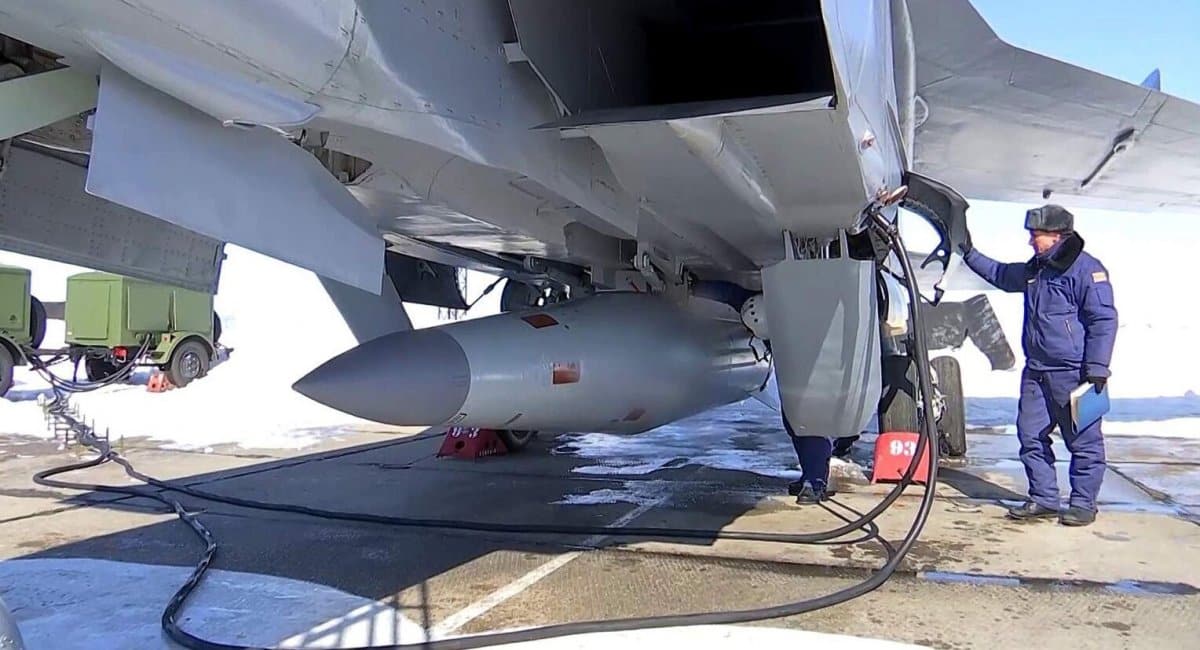
Before assessing the impact of a specific production target, it is necessary to inventory the missiles in service and their observed uses. Russia highlights four so-called hypersonic families: Avangard, Kinzhal, Zircon, and Oreshnik. Avangard is a very fast strategic glider, advertised as capable of speeds between Mach 20 and Mach 27, powered by an intercontinental ballistic missile, and is estimated to have only about a dozen units. Kinzhal is launched from MiG-31Ks and is derived from the Iskander missile, from which it borrows its architecture. In 2025, more than fifty Kinzhal launches were recorded, indicating sustained use.
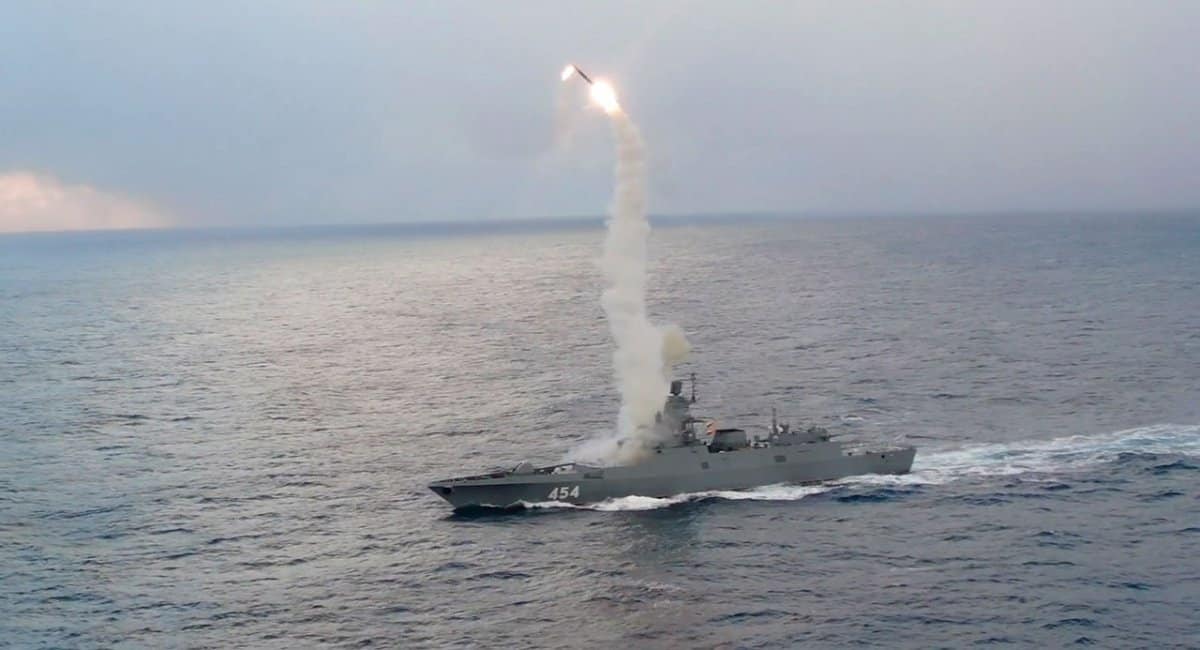
In the Ukrainian theater, combined drone and missile strikes have reached significant volumes, maintaining continuous pressure on air defenses. According to available feedback, the Patriot systems and F-16s delivered to Kyiv are insufficient to intercept everything. These strikes combine Kalibr cruise missiles, Iskander-M ballistic missiles, Geran drones, and other types of missiles. By targeting energy and industrial infrastructure in Kyiv, Poltava, Kremenchuk, and Kharkiv, these combined strikes increase the likelihood of prolonged disruptions and lasting damage.
The Oreshnik intermediate-range ballistic missile was deployed near the Polish border, raising regional political and military tensions. On January 8, 2026, a strike targeted a factory near Lviv, in the immediate vicinity of a NATO member state. Available information describes a medium-range ballistic missile without a nuclear warhead. Approaching border boundaries, the use of this delivery system mechanically increases the risk of a cross-border incident or unintended escalation, while early warning and interception operations must contend with rapid trajectories and shortened reaction times.
The term "hypersonic" applies to speeds exceeding Mach 5, but its operational relevance remains debated for certain missiles. Kinzhal uses the Iskander architecture, and Patriot missile interceptions have been reported against both Kinzhal and Zircon. These reports, of moderate reliability, contradict the notion of absolutely unstoppable weapons. The official Russian argument emphasizes maneuverable flight profiles and high terminal speeds, while modern missile defenses appear capable, under certain conditions, of neutralizing these challenging threats.

High-speed terminal guidance against a ship remains a delicate point for anti-ship use. "Guiding an object traveling at very high speed toward a moving target like a ship seems rather complicated to me, and frankly, I don't believe it's possible," says Admiral Christophe Prazuck, former Chief of Staff of the French Navy. Inventory limitations also impact strategic value, as a dozen Avangard missiles necessitate highly selective use against high-value targets. Overall, this paints a serious threat, but one constrained by identified technical and quantitative limitations.
Kinzhal in Ukraine has become a case study of the hypersonic threat
Based on this, the announcement of a target of 1,000 hypersonic weapons per year by 2025 represents a claimed leap in scale rather than a verified reality. Moscow has also announced the production of test units for three air-launched missiles presented as new and intended for the Tu-160M, Tu-95MS, and Tu-22M3 bombers, with claimed high ranges and speeds. At this stage, these are demonstration batches rather than a stabilized and standardized production run. The feasibility of such a production rate would require a significant industrial ramp-up, which has not been publicly confirmed.
Access the full analysis
This article is reserved for MetaDefense subscribers. A subscription gives you access to all analyses, reports, and insights published on the site.
No commitment. From €1,99.

