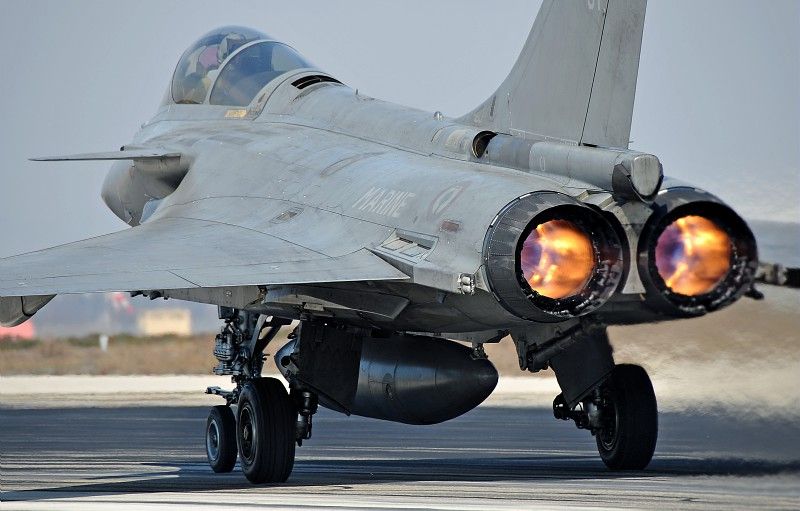
After an initial Military Programming Law 2019-2025 intended, above all, to stop the haemorrhage of resources and men to which the French armies were exposed, President Macron launched, in 2023, a new LPM 2024-2030, for the recapitalization of forces, to respond to the evolution of threats in Europe and in the World.
Very ambitious, this plan plans to increase the army budget by 50% over 7 years, going from €45 to €67 billion, which will allow the launch of several major long-awaited programs, such as the Rafale F5 and its combat drone, the new generation aircraft carrier or the Caesar MK2 cannon, while continuing key programs, such as SCORPION.
However, beyond these ambitions, the LPM is not without certain flaws, which have become increasingly worrying in recent months, such as its lack of flexibility. Above all, it makes certain impasses, in terms of equipment programs, which directly threaten the effectiveness and security of the forces, in a context of growing tensions, including in Europe, no longer excluding the hypothesis of a high-intensity engagement between NATO and Russia.
In the first part of this article, we discussed five programs that are already seriously lacking in the proper functioning of the Army, and that do not appear in the current LPM. Now, we will focus on the Navy and the Air and Space Force, which are also exposed and weakened.
Part Two – the first part is available here.
5 programs as urgent as they are essential for the Air and Space Force and the Navy, not covered by the 2024-2030 LPM
A frigate to replace the FLF Lafayette class
| Development | Production | Export potential |
| € 1bn | 1,5 + 3 billion euros for 6 copies. | Egypt, Morocco, Greece |
Le replacement of stealth light frigates, or FLF, of the Lafayette class, is also not planned by the LPM 2024-2030. However, as mentioned in a previous article, these ships play an essential role in densifying a fleet of first-rate frigates tailored to the finest detail, to 15 examples.

Through a clever play on writing and communication, many people today believe that the 5 FDIs to be delivered to the French Navy will succeed the 5 FLFs currently in service. In reality, the FDIs will replace the last 5 FREMMs, cancelled in 2015, to allow the development of a new, more efficient class of frigates, according to Naval Group, to meet export demand.
These 5 cancelled FREMMs, for their part, were to replace the withdrawal of the last 5 T70 anti-submarine frigates of the Georges Leygues class, in order to maintain the format of 15 1st rank frigates required by the LBDSN 2013, and respect the format of the French escort fleet of the 80s and 90s, with 4 anti-aircraft escorts, and 11 anti-submarine escorts.
Due to their insufficient armament and sensors, the FLF of the LaFayette class were never able to escort anything, incapable as they were of ensuring the anti-aircraft and anti-submarine protection of another ship. Despite their limitations, the 5 FLFs had a very sustained operational life, completing the fleet of 1st-rank frigates, in place of the Avisos Escorteurs A69.
In fact, a fleet of 5 to 6 light frigates, with anti-submarine capabilities and anti-aircraft self-defense, is essential to enable the French Navy to meet its operational contract and the changing threats.
Recent clients of the French FREMM and FDI, such as Egypt, Morocco and Greece, could respond favourably to France, to co-develop this model, which could also effectively replace the European Patrol Corvette programme, intended to replace the six Floréal frigates, by favouring an exclusively national solution, while the activity of the Lorient site risks quickly becoming problematic, with the end of the FDI programme, while enriching the manufacturer's catalogue with a 3500 tonne vessel, halfway between the Gowind 2500 (2500 t) and the FDI (4500 t).
Modernization and expansion of anti-aircraft and anti-ballistic capabilities of 1st-rank frigates
| Development | Production | Export potential |
| 200 to 300 m€ | €2,5 billion for 15 copies. | Egypt, Morocco, Greece |
Feedback from Ukraine and from the Red Sea, have highlighted, in recent months, the severe hardening of naval warfare, with the arrival and democratization of attack drones and anti-ship cruise missiles, and the arrival of anti-ship ballistic missiles.
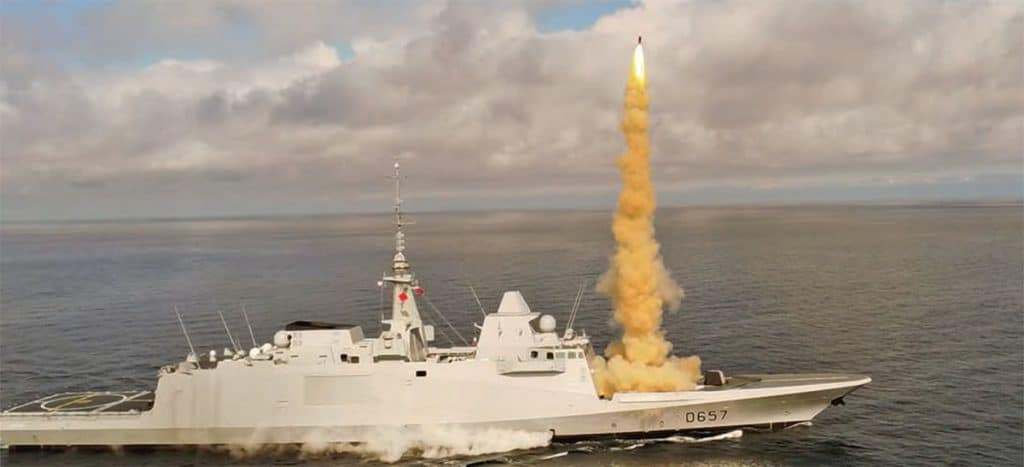
With only 16 missiles on board its six Aquitaine-class frigates, and its five future FDI Amiral Ronarc'h-class frigates, the French Navy is very exposed in this area, despite the recognized performance of the Aster missile.
Furthermore, the French Navy's Aster 30 missile fleet, although mainly composed of 30B1s, does not utilize the dual warhead optimized for anti-ballistic interception, while the radars of the Aquitaines are also not optimized for this mission.
It is therefore necessary, and extremely urgent, to significantly strengthen the air defense, missile defense, and ballistic missile capabilities of the French frigate fleet. This implies increasing the number of Vertical Launch Systems (VLS), where possible, by increasing the number of FDI systems from 16 to 32 silos, and the number of Horizon systems from 48 to 64.
Furthermore, it is necessary to modernize the Aster 30B1 fleet to enable the use of the dual warhead and to extend the effectiveness of the Héraclès radars in anti-ballistic missile mode as much as possible. Finally, all ships should be equipped with CIWS close-in weapon systems, such as Naval Group's Modular Multipurpose Launcher, or even a missile-gun solution incorporating the 40 mm RapidFire cannon.
The upgrades made to the French FREMM frigates could quickly attract the interest of Morocco and Egypt, each of which operates an Aquitaine-class FREMM. Greece, for its part, might see an advantage in replacing the SeaRAM missile system on its FDI frigates with the French LMP system.
A fleet of robotic ships and submarines
| Development | Production | Export potential |
| 1 to 3 billion euros | 2 + 3 billion euros for 100 copies. | UAE, Egypt, Greece, Malaysia, Brazil, India |
In all military domains, the arrival of robotic systems represents a decisive turning point in the way doctrine and operations are conceived. This is even more true in the naval domain, where resources are limited and not easily adaptable. Thus, unless the principle has been integrated into the design, adding VLS (Vehicle Launch System) to the hull of frigates or destroyers, such as the Aquitaine-class FREMMs, is an excessively complex, costly, and even risky procedure.
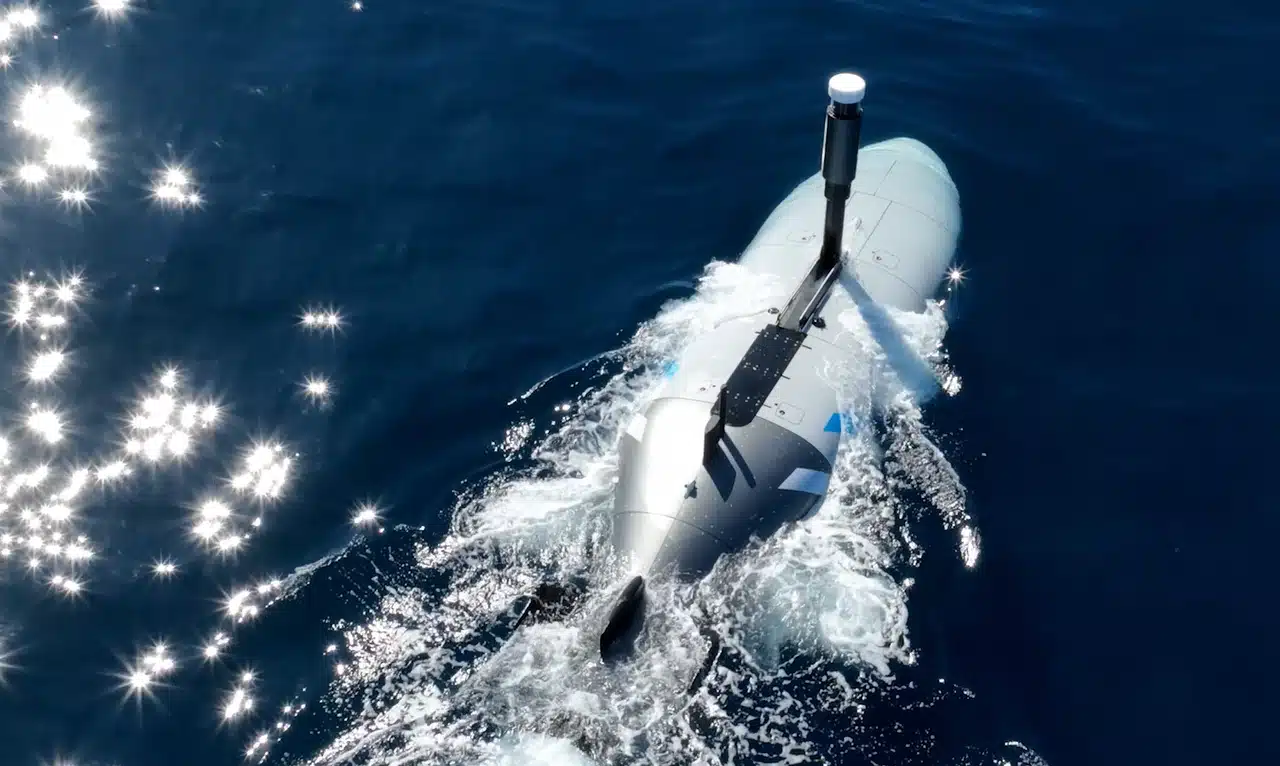
To meet the rapidly evolving sensor and firepower requirements of large surface and submarine naval units, robotic ships represent a near-ideal solution. They can carry new active or passive sensors to expand the ship's detection capabilities, and even additional munitions to increase its firepower.
Furthermore, they are more compact and significantly less expensive to build than crewed vessels, and are not subject to human limitations. Finally, by definition, they do not require a crew, a crucial point when human resource pressure becomes the limiting factor in fleet sizing, although it should be borne in mind that these vessels will require increased maintenance once in port.
In this area, Naval Group has taken the lead by anticipating, for several years, the needs that will be expressed by the French Navy. Thus, in 2021, the company presented its first large-capacity autonomous tactical submarine, which has since been selected by the DGA (French Directorate General of Armaments) to become the technological cornerstone of a demonstrator currently under development and named DDO.
More recently, at the Euronaval 2024 trade show, Naval Group unveiled an offering in this field, which, for surface ships, consists of three models of autonomous ships of increasing size, forming the Seaquest range, a launching and recovery system called Sealken, underwater drones called Seagent, and a control and command core, named Steeris.
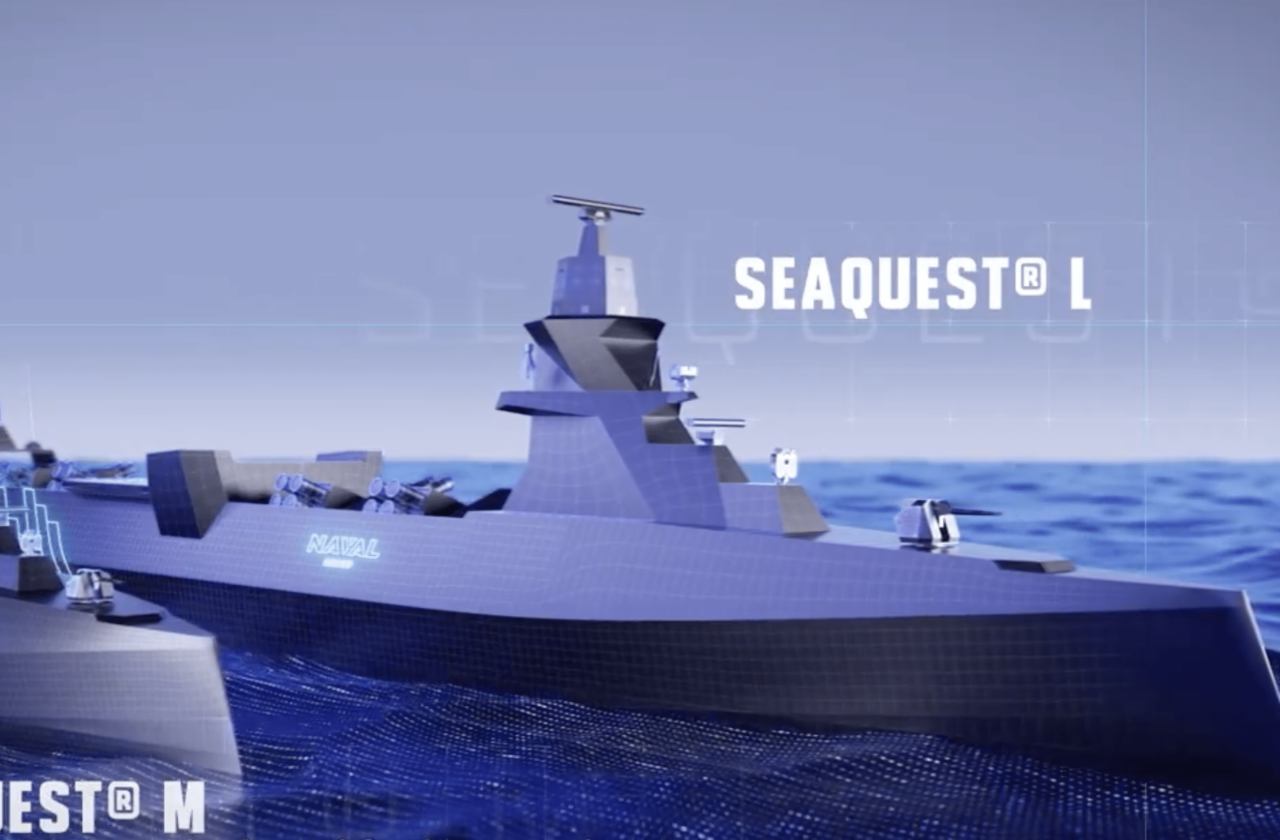
While France and its Navy are not more exposed, or lagging behind, than their European neighbors and allies in this area, actively engaging in it, in order to gain a real technological and operational lead, would constitute a definite added value for the French fleet, both to protect its marine spaces, and to increase the effectiveness of its ships.
All recent clients of the French naval defense industry represent potential partners in such a program. India, Indonesia, Brazil, and the Netherlands would find it highly advantageous to acquire large underwater drones to operate alongside their Scorpene and Blacksword Barracuda frigates. Greece, Egypt, Morocco, and Malaysia, for their part, would be ideal partners for the Seaquest range, alongside their Gowind 2500, FREMM, and FDI frigates.
The successor to the E-3F Awacs early warning aircraft
| Development | Production | Export potential |
| 0 to 1 billion euros | 2 billion euros for 5 to 6 units. | Poland, Egypt, UAE, India, Serbia, Greece, Indonesia |
Entering service in 1991, the four E-3F AWACS early warning aircraft of the French Air and Space Force have already been flying for over 30 years. France is one of the few countries in Europe, along with Great Britain and Sweden, to possess such an early warning capability; the others rely on the NATO fleet of 18 aircraft.
These aircraft contribute to the defense of French airspace. They can also support French air deployments and operate in support of NATO when necessary. Above all, they play a crucial role in the airborne component of deterrence, providing protection and support for Rafale armed with the ASMPA-R supersonic nuclear missile, and their escort.
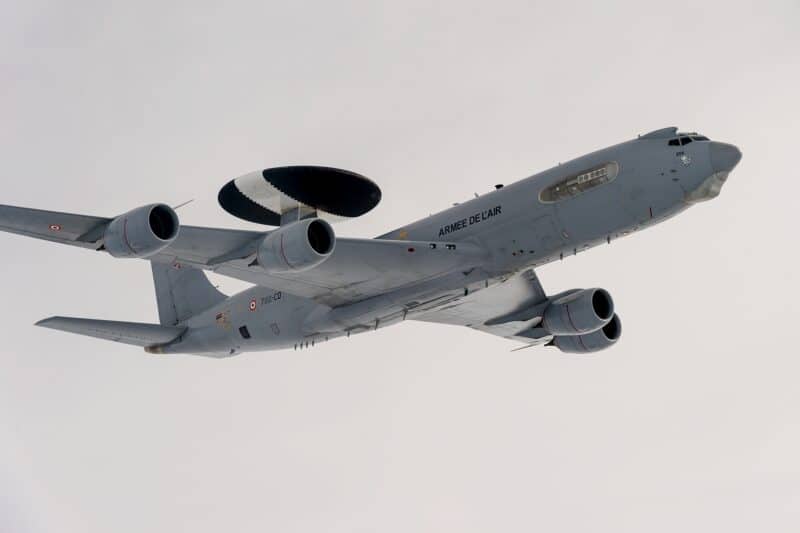
In fact, replacing these devices is essential and urgent. However, it was not planned in the 2024-2030 Military Programming Law (LPM), even though discussions have begun on this subject, particularly with Sweden, which is proposing the GlobalEye system in this area.
France has several options here. The first is to turn to an off-the-shelf solution, such as the Swedish GlobalEye or the American E-7A Wedgetail. The former is more compact, less powerful, but also much less expensive than the latter, whoseThe unit price now exceeds one billion dollars.,versus €250 to €300 million, for the Swedish model.
The other possibility for France would be to develop a sovereign solution, based, for example, on a Dassault Falcon 10X. Much more expensive in terms of development, since it would require developing the sensors and C2 systems and integrating them into the aircraft, this solution has the advantage of enriching France's export offering in terms of air superiority, with the target being the clients of the Rafalebut also some countries wishing to strengthen their resources in this area, such as Poland.
4 additional fighter squadrons and an additional embarked fighter flotilla
| Development | Production | Export potential |
| € 0bn | 9 + 9 billion euros for 107 copies. | Brazil, Egypt, Indonesia, India, Peru, Colombia… |
Over the past twenty years, the French Air and Space Force has received the largest equipment allocations within the French armed forces, excluding nuclear deterrence, for the acquisition of the fleet of RafaleThe A330 MRTT Phoenix in-flight refueling aircraft, or the A400M strategic and tactical transport aircraft, are examples. It is, in fact, less exposed than others to certain shortcomings of the Military Programming Law (LPM), especially since the aeronautics industry remains the flagship of the country's defense exports.
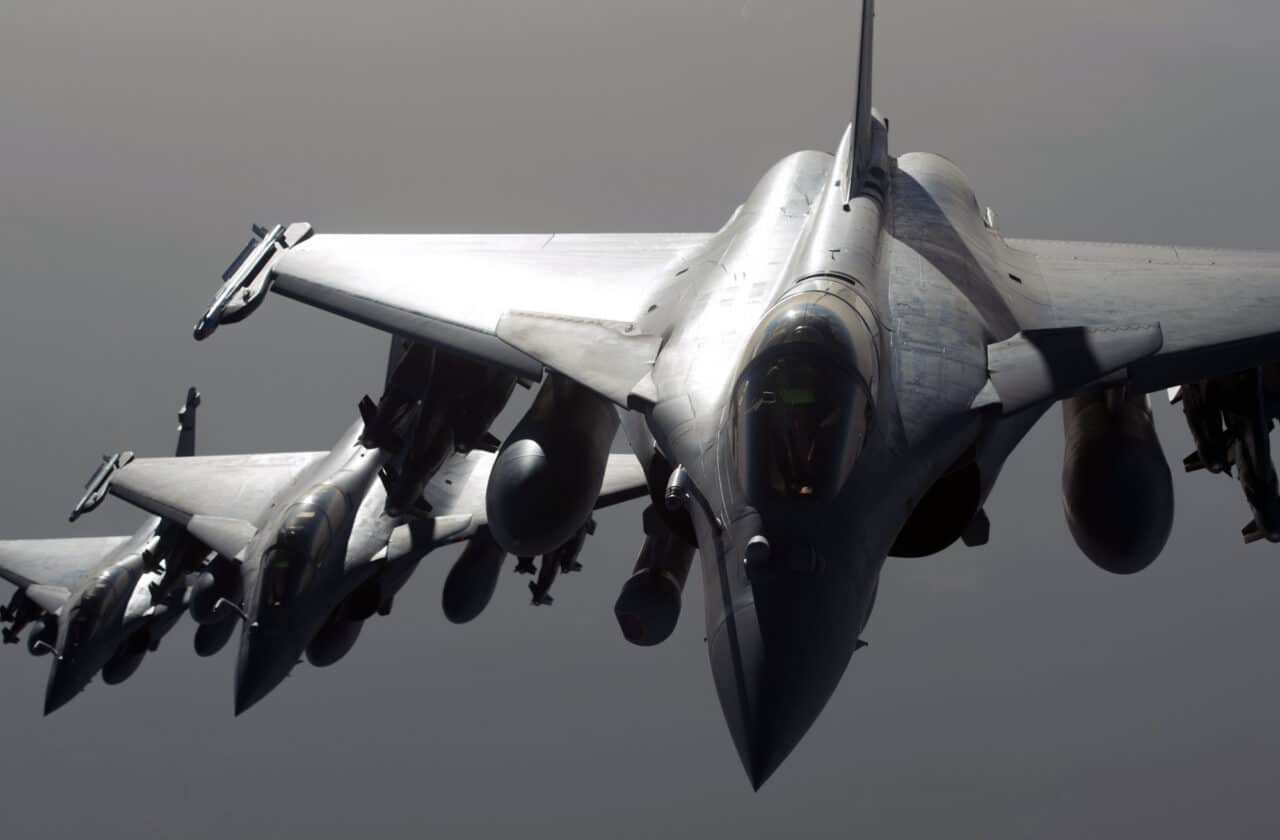
However, it too has suffered severe cuts in recent years, significantly impacting its size and resources. This is particularly noticeable with regard to its fighter fleet, which has shrunk from nearly 600 aircraft in 1990 to 185 today.
As with the Military Programming Law (LPM), the fighter force structure has been cut to the bare minimum, with no room for maneuver, and no buffer for attrition. This aspect has been highlighted in recent months, following the transfer of 5 Mirage 2000-5s to Ukraine, and the loss of 2 Rafale An accident has compromised the proper "peacetime" functioning of this force, which is nevertheless crucial for both deterrence and all external interventions.
In a previous article, we showed thatThe Air Force was short 95 fighter jets, to respect its operational contract, particularly since its commitment to provide 40 fighter jets to NATO, in the event of a conflict, has become much more credible.
Therefore, four fighter squadrons are currently lacking in the Air and Space Force, and it would be advisable to quickly create and equip them in order to regain the balance and safety margins necessary to face current tensions more calmly.
The same reasoning concluded that the French carrier-based fighter force, for its part, also lacked 12 new combat aircraft, i.e. a new fighter squadron.

Based on Rafale F5, development investments for such a program would be nil, from a technological point of view, since it is already planned within the framework of the LPM 2024-2030. On the other hand, in addition to the acquisition of the aircraft, it would be necessary to create, equip and train the units and infrastructures that will receive the aircraft, which implies an additional investment, which is taken into account in this assessment, beyond the prices of the aircraft in flight condition.
Furthermore, in this scenario, it would be necessary to increase industrial production capacities, which could have a positive influence on the contracts currently being discussed, with revised schedules and, perhaps, more attractive prices.
Sustainable overinvestment for public finances, even in the current context
The list mentioned here is not exhaustive. It only presents a snapshot of the most pressing needs of the French armed forces, which must be met within the framework of this Military Programming Law, without being able to wait until its completion.
Access the full analysis
This article is reserved for MetaDefense subscribers. A subscription gives you access to all analyses, reports, and insights published on the site.
No commitment. From €1,99.