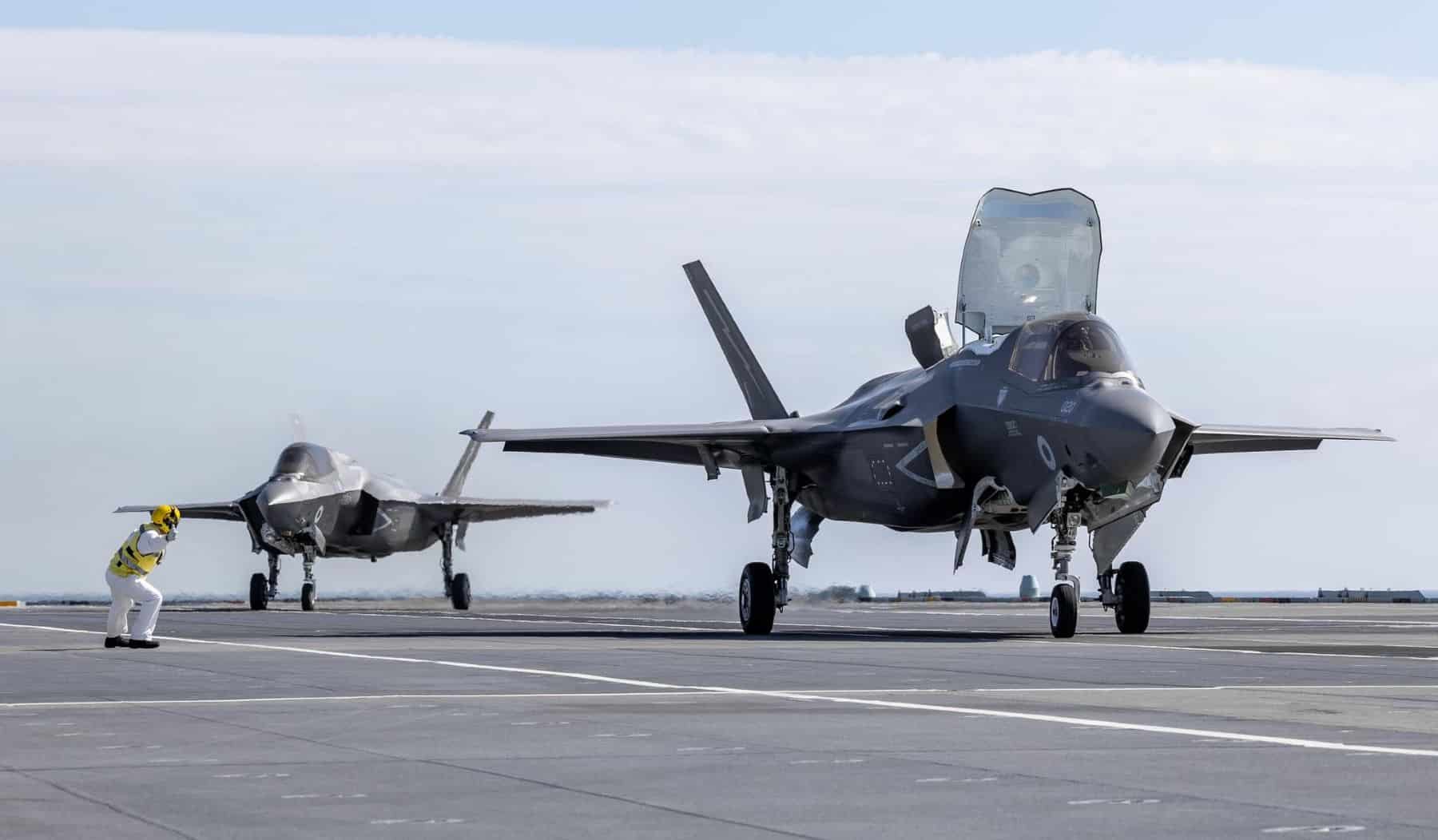
On June 21, 2024, in Portsmouth, United Kingdom, the Royal Navy convened a conference bringing together up to 200 suppliers to outline its new naval air strategy centered on a hybrid carrier air group. A year later, the Strategic Defence Review (SDR) confirmed the shift towards a mixed force combining manned aircraft and autonomous systems. This sequence established the political, industrial, and operational framework for a transformation that directly impacts the composition of the British carrier air group.
The two Queen Elizabeth-class aircraft carriers currently operate short takeoff and vertical landing (STOVL) aircraft without catapults, with the F-35B as their dominant manned capability. The stated ambition of a hybrid carrier air group will alter the use of resources, the allocation of missions, and the support requirements throughout the operational cycle. This evolution will have to contend with budgetary constraints, an industrial schedule, and international dependencies related to the F-35B. The key questions then lie in the form this hybrid air group will take, the balance between manned and unmanned capabilities, and the scale of operations the Royal Navy will be able to commit in 2035.
The catapult-less Queen Elizabeth-class aircraft carriers form the backbone of the Royal Navy's carrier air group
Before the recent reorientations, the British carrier air group relied on the two Queen Elizabeth-class aircraft carriers. These 284-meter, 65,000-ton vessels could deploy up to 40 aircraft, including more than twenty F-35Bs, which formed the core of its manned capabilities. The fleet was thus sized to perform air superiority, strike, and support missions from decks without catapults. This architecture provided a solid foundation for sustained operations. However, it also imposed technical and capability limitations that restricted the scope for short-term development.
Within this framework, the Royal Navy operated within a model of successive replacements, platform for platform, which perpetuated the existing balance. This approach prioritized fleet continuity rather than restructuring based on operational needs. It allowed for the gradual absorption of transitions, at the cost of limited disruption to the combination of assets. This model directly influenced the planning of the carrier air group. It was less about preparing for a rapid shift towards hybrid architectures than about consolidating existing capabilities around the dominant manned aircraft.
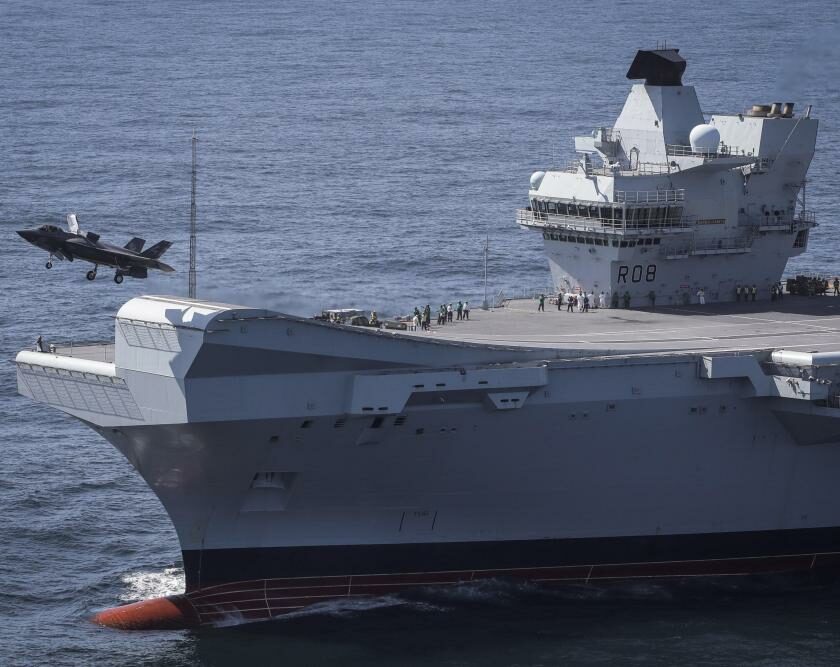
However, the absence of catapults and arresting wires immediately precluded the use of heavy aircraft designed for catapult-type operations. Operating such aircraft would have required major structural modifications to the ships. Installing a catapult system on a ship already in service involved extensive work and lengthy downtime. The operational availability of at least one aircraft carrier would have been reduced for the duration of the work. This technical constraint defined the scope of embarked launch vehicles and hampered the introduction of new capabilities.
Finally, experiments with unmanned aircraft and autonomous solutions were underway, but on a limited operational scale. These took the form of proofs of concept and gradual deployments designed to validate processes and procedures. The areas considered covered early warning, surveillance, naval group security, logistics, and potential combat escorts. The success of this trajectory already required a robust digital architecture, integration standards, and clear product governance. It also implied strengthening cyber defenses to address multi-domain threats.
The new strategy paves the way for catapults and heavy drones on aircraft carriers.
The adoption of the naval aviation transformation strategy triggered a structured engagement with industry. The Royal Navy announced a conference in Portsmouth bringing together up to 200 suppliers to define the outlines of the future program. A notice published on June 21, 2024, indicated that the department would present the principles, challenges, and objectives of the strategy. The information exchanged would be classified at the Official level, according to the same document. This approach aimed to secure stakeholder buy-in and prepare for a controlled ramp-up.
This article is now reserved for subscribers.
Articles in this section Defense News are fully accessible during 72 hours after their publication. Beyond that, they join the feed reserved for MetaDefense subscribers.
Subscription can be cancelled at any time, starting from €1,99.