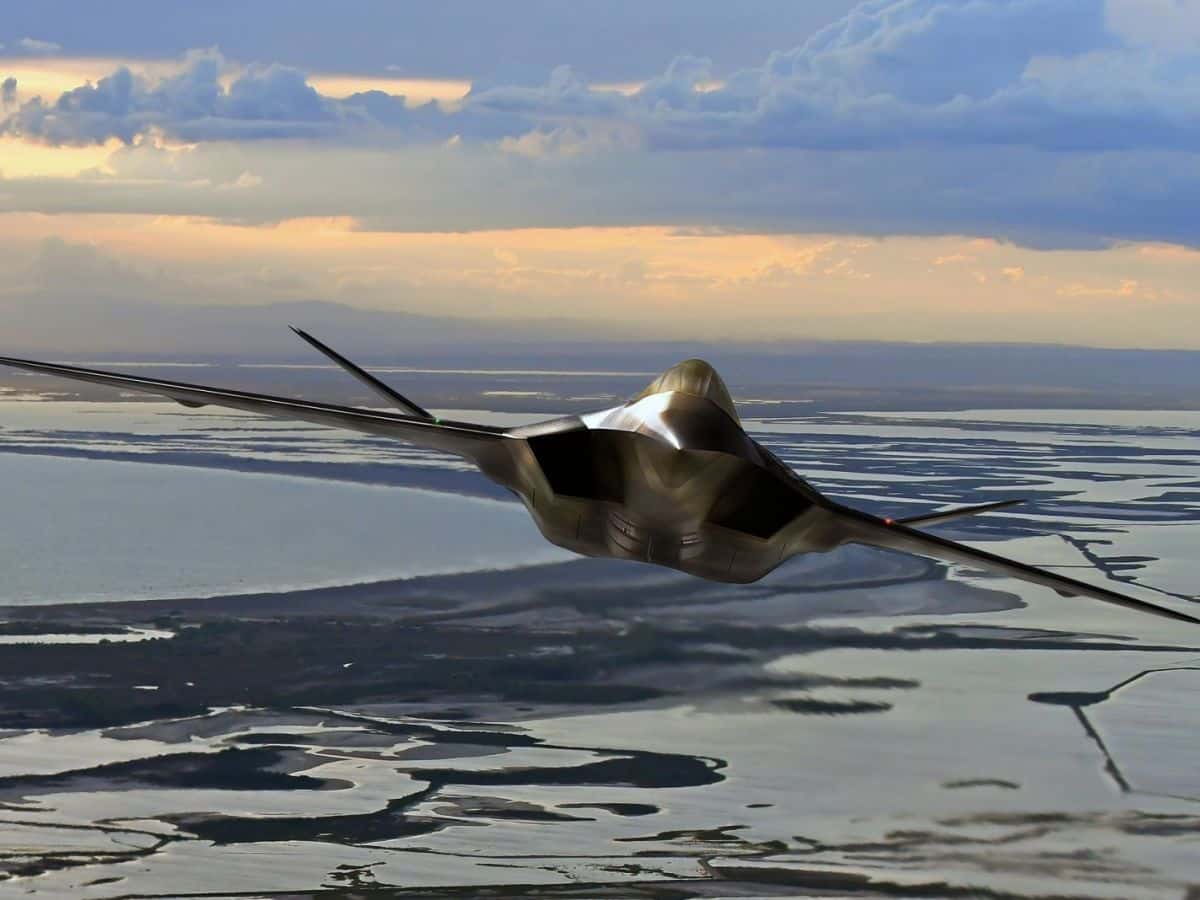
As the Future Combat Air System (FCAS) becomes bogged down, Emmanuel Macron announces mediation to bring Dassault Aviation and Airbus closer together around the Next Generation Fighter (NGF), with a result expected by mid-April to respect the German budget schedule.
This initiative comes after the freezing, at the end of 2025, of Phase 2, which prevented the launch of the demonstrators and increased technical and budgetary risks, followed by the postponement of the political decision initially scheduled for December. In parallel, on February 18, 2026, German Chancellor Friedrich Merz declared the SCAF program defunct, and Berlin's purchase of 35 F-35As secures the nuclear mission, thus reshaping the dynamics of the negotiations.
The SCAF program is bogged down after the demonstrators were frozen
Launched in 2017 as a Franco-German initiative mirroring the Main Ground Combat System (MGCS), the SCAF (Future Combat Air System) was immediately imbued with significant political weight. Emmanuel Macron committed to the project alongside Angela Merkel, making its failure a costly prospect for the French government. The dual ambition, encompassing both air and land capabilities, aimed at rebalancing industrial power between partners, but it quickly encountered the realities of national supply chains and the lack of clear responsibilities among manufacturers.
In 2019, the principle of the best athlete was adopted to clarify roles and avoid duplication. The target budget remained considerable, around one hundred billion euros. In early 2025, a study by Tobias Mueller detailed the development costs, unit price, and economic impact of the NGF, the aeronautical core of the SCAF, confirming the need for unambiguous industrial management.

Despite these safeguards, the program was described in early 2025 as being undermined by clashes between Dassault Aviation and Airbus, against a backdrop of deteriorating Franco-German defense relations. It was even considered on the verge of collapse, given the mounting obstacles over specifications and the division of tasks. The risks of a breakdown in cooperation or diverging paths then gained credibility, due to the lack of decisive political decisions.
These tensions resulted in significant delays. Phase 2, expected in December 2025, was put on hold at the end of the year, preventing the launch of the demonstrators. The decision, postponed until the end of December, confirmed the project's cancellation. Without demonstrators, the technical and scheduling risks inevitably increased, making subsequent validations more expensive.
Meanwhile, strategic differences have emerged. Berlin ordered thirty-five F-35As, the only aircraft qualified to carry the B61 Mod 12 nuclear bomb, thus securing NATO's shared nuclear mission for Germany. This decision reduces the operational pressure for a joint next-generation fighter dedicated to this mission and alters the political landscape as mediation approaches.
Emmanuel Macron launches a mediation process with a mid-April deadline
In this context, Emmanuel Macron announced a mediation mission, accepted by Friedrich Merz, to try to save the sixth-generation program. "We have decided to launch a mission to bring Airbus and Dassault together in the coming weeks to find common ground," the president declared at a European summit in Brussels. The objective explicitly targets the NGF, the crux of the disagreement.
This article is now reserved for subscribers.
Articles in this section Defense News are fully accessible during 72 hours after their publication. Beyond that, they join the feed reserved for MetaDefense subscribers.
Subscription can be cancelled at any time, starting from €1,99.