

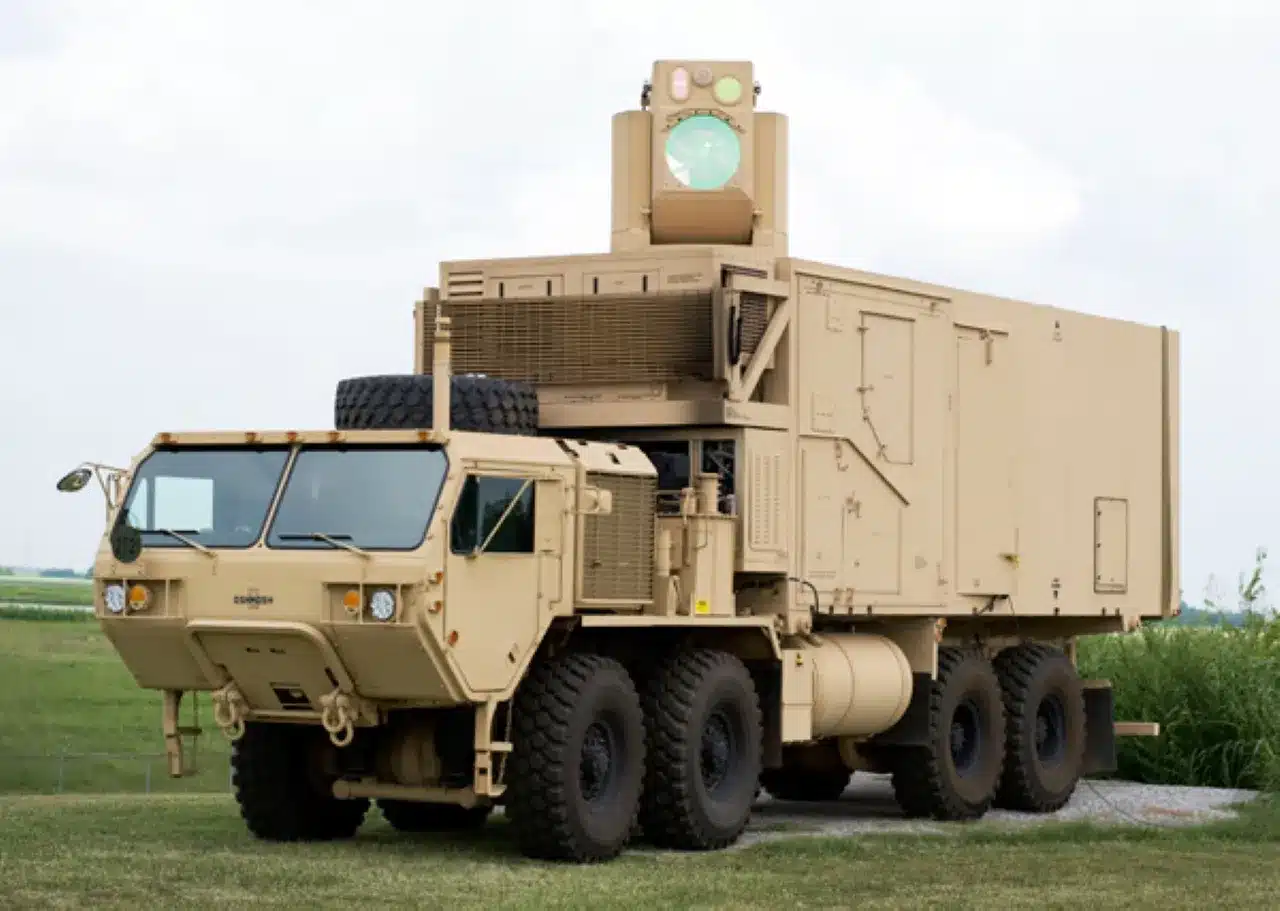
High-energy lasers are back in the spotlight following the March 9 decision reported by the Congressional Research Service. The U.S. Army will no longer develop the 300-kilowatt system into a formal program and is reducing the effort to a single prototype for testing in New Jersey and then at Dugway, Utah. This prototype will subsequently be abandoned as a deployment candidate in favor of the Joint Laser Combat System, outlined in the fiscal year 2026 budget request.
This pivot, following the end of the SHiELD program and the difficulties of the DE M-SHORAD Guardian, reopens the question of the operational feasibility of directed energy weapons and high-energy lasers outside the laboratory.
The SHiELD program reveals insufficient maturity for airborne employment.
The U.S. Air Force launched the SHiELD program in 2016 to integrate high-energy lasers onto fighter jets and support aircraft to counter air-to-air missiles and air defenses. The program has since been completed, with no further testing planned. "The SHiELD program is finished, and there are no plans for further testing and evaluation," said Dr. Ted Ortiz of the U.S. Air Force Research Laboratory. This initial signal confirmed that the technology is still not mature enough for airborne use.
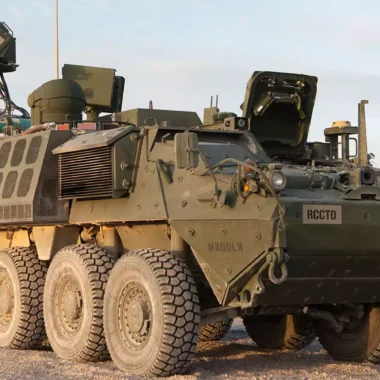
On the ground, the US Army pursued a tactical approach with the DE M-SHORAD Guardian system. Initial operational trials began in mid-2021 to validate integration and performance in real-world conditions. Test systems were delivered to Fort Sill in September 2022 for evaluation by operational units. This shift from laboratory to field testing aimed to assess the effects on slow-moving targets and unmanned aircraft, within a framework representative of tactical constraints.

The schedule quickly slipped due to recurring technical difficulties. The US Army has delayed entry into service by at least a year, indicated Lieutenant General Rasch, who commands the Rapid Capabilities and Critical Technologies Office. The trajectory was extended to address performance and reliability gaps, revealing a high sensitivity to availability requirements and maintaining operational readiness outside of heavy infrastructure.
The Guardian prototypes deployed for trials in operational theaters, particularly in Africa, revealed significant heat generation, fragility in harsh environments, and a high level of technical support. Performance fell short of expectations, to the point that the future of the program was deemed seriously threatened. These findings raised fundamental questions about the environmental robustness of ground-based lasers and their ability to reproduce the effects observed in the test environment.
In parallel, the HELSI initiative delivered a 300-kilowatt demonstrator in September 2022. A contract authority signed in July 2023 initially targeted four IFPC-HEL prototypes. This ramp-up addressed a clear need to counter faster and more formidable targets than lightweight drones. In 2025, the Defense Intelligence Agency highlighted a significant gap in the US domestic defense against cruise missiles launched from Russian aircraft or Chinese naval assets, which shifted priorities toward more ambitious architectures.
The US Army is refocusing its efforts on a single IFPC-HEL prototype to prepare a joint system
The adjustments made to Guardian are reflected in the decision to recalibrate the IFPC-HEL (main illustration). A Congressional Research Service report published on March 9 revealed that the US Army no longer plans to transition its 300-kilowatt IFPC-HEL system, nicknamed Valkyrie, into a formal program. This shift makes a rapid transition unrealistic and necessitates a revision of acquisition timelines, given the recent results from the demonstrators.
Access the full analysis
This article is reserved for MetaDefense subscribers. A subscription gives you access to all analyses, reports, and insights published on the site.
No commitment. From €1,99.

