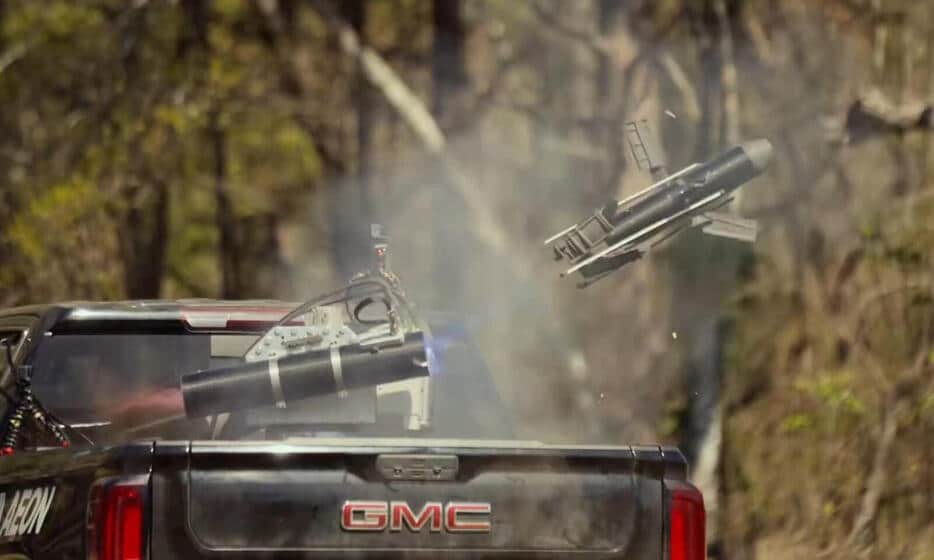
The trials of Aeon's Zeus man-portable anti-tank missile and the presentation of the Barracuda range by Anduril are part of a growing trend towards effectors promising comparable performance at a much lower cost. Aeon claims that the acquisition cost of Zeus is 90% lower than that of the FGM-148 Javelin, a comparability that will need to be confirmed by operational evaluations.
The Barracuda cruise missile aims to overwhelm air defenses by exploiting the asymmetry where interception is more costly than attack. Since 1970, arms prices have risen five times faster than inflation, compressing production volumes. This combination of factors raises the question of a lasting shift in US military procurement procedures and its industrial implications.
The F-35 illustrates the cost overruns and volume contractions
Arms prices have risen far faster than inflation in their countries of origin. In constant terms, the prices of Western systems have increased fivefold, a sign of a structural drift beyond mere monetary inflation. The Pentagon's budget has grown from approximately $83 billion in 1970 to $877 billion in 2022 without easing the pressure on the volume of weapons delivered. Each technological advancement now increases the unit cost faster than the budgets themselves.
The American defense industry accounts for roughly 40 percent of global annual revenue, largely setting standards and prices. In 2023, the ten largest American companies generated over $250 billion in revenue. The Pentagon spends an average of over $200 billion annually with this industrial base, reinforcing its dominant position in negotiations. Major programs establish technical and logistical benchmarks adopted by allies, perpetuating self-sustaining cost trajectories.

The Office of Government Accountability (GAO) recently released its annual report on the U.S. defense industry, painting a worrying picture. The Pentagon's top 100 programs commit more than $2 trillion over the coming years, locking in technical and scheduling choices. Such a massive footprint reduces the scope for more lean alternatives as long as contractual milestones remain tied to complex specifications. This budgetary and procedural inertia complicates the return to sustained production volumes within timeframes compatible with strategic competition.
Cost increases have reduced production runs and driven up the cost of both technology and maintenance, at the expense of available mass. Without a sustained reversal of unit inflation and a ramp-up in industrial production, the reform will restore neither the mass advantage nor resilience. The F-35 program illustrates this inertia, with a development cost exceeding $450 billion and Block IV capabilities now targeted for 2029. This timeline delays the promised capability gains and ties up resources that are not immediately bolstering active fleets.
For the past two and a half years, the war in Ukraine has led to the widespread use of lightweight and inexpensive effectors such as FPV drones, the Magura V5, and the SeaBaby. Rapidly designed and produced, they have achieved tangible results by damaging or sinking several naval vessels and forcing the Russian Admiralty to evacuate Sevastopol. The proliferation of low-cost options reduces the advantage of heavy-duty approaches when they cannot be deployed in sufficient numbers within short timeframes. It emphasizes the value of rapid iteration and adaptation, and redefines the cost-per-effect equation at the tactical and operational levels.
A Zeus anti-tank missile at $40,000, 10 times cheaper than the Javelin
In this context of rising costs and the need for mass production, Anduril unveiled its Barracuda drone range, available in three models: the 100, 250, and 500, each with increasing range and payload. This modular family targets missions currently performed by specialized munitions that are more expensive and slower to produce. The company promises continuous industrial production capable of meeting high demand at a sustained pace in the event of conflict, with effectors delivering comparable capabilities at a price significantly lower than established standards.
Access the full analysis
This article is reserved for MetaDefense subscribers. A subscription gives you access to all analyses, reports, and insights published on the site.
No commitment. From €1,99.