

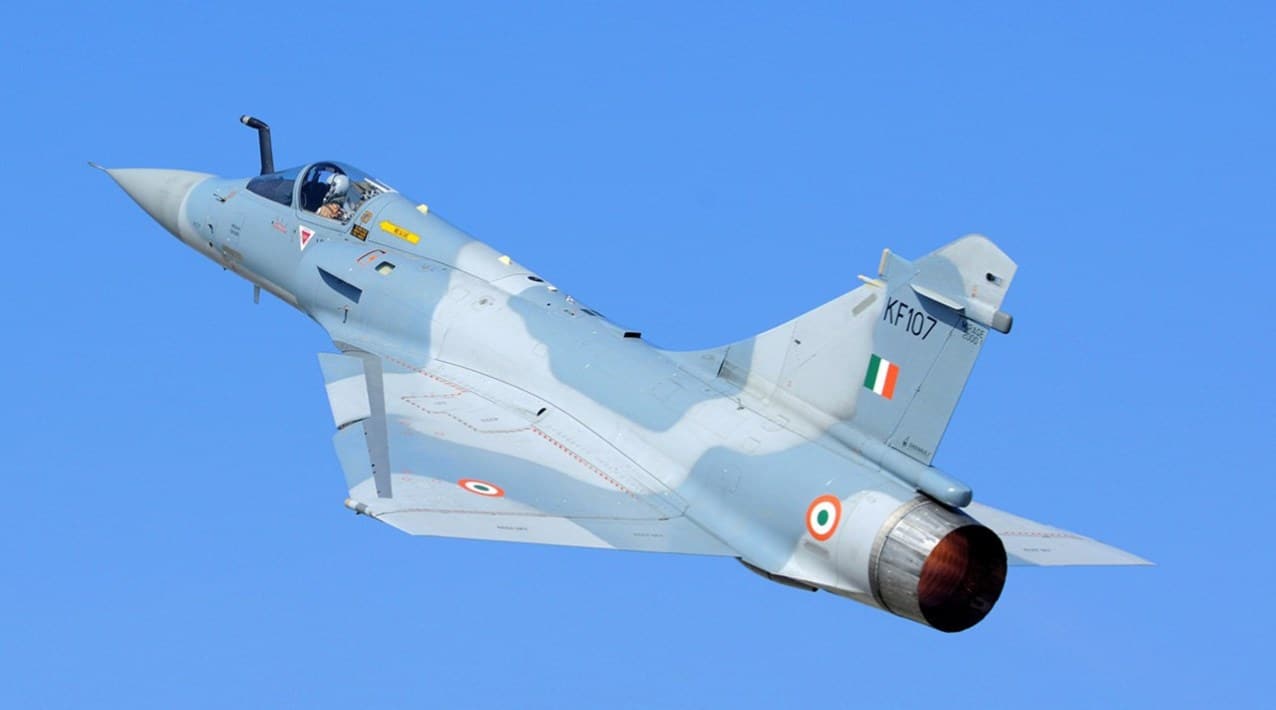
The announcement of the feasibility of integrating the Astra Mk2 onto the Mirage 2000 only tells part of the story. Behind the promise of a significantly increased BVR (Battle Range Vehicle) budget lies a far more fundamental tension for the Indian Air Force: transforming a fighter optimized for medium-range combat into a node of a lethal long-range network, even as the fleet is undergoing transition and the industrial schedule imposes its own constraints.
Between the experience gained with the Astra Mk1 on Su-30MKI, the lessons learned from very long-range surface-to-air engagements in 2025, and the extension of the Vajra's life, the challenge is no longer just to add kilometers, but to know how to convert them, sustainably, into an operational advantage.
Lacking the Meteor missile, the Mirage 2000 did not cross the 80 km line for the BVR firing.
While the possibility of an indigenous very long-range capability for the Mirage 2000 was already emerging, the Vajra (the IAF's designation for the M2000-5) remained, until 2026, tied to the radar/MICA system, with a long-range engagement envelope of between 60 and 80 kilometers. Within this framework, the operational posture prioritized energy management and optimized approach profiles, rather than long-range strikes, in order to mitigate a sometimes unfavorable balance of power against threats operating beyond a hundred kilometers.
This situation was part of a national industrial trajectory already underway. Designed by the DRDO and produced by BDL, the Astra Mk1 (110 km face-to-face) reached the initial production contract milestone in May 2022 for 2,971 crore rupees, or $383 million. Fully operational on the first Su-30MKI production line (approximately 270 aircraft), it has provided the IAF with an essential capability and doctrinal foundation to move beyond simply providing medium-range BVRs.
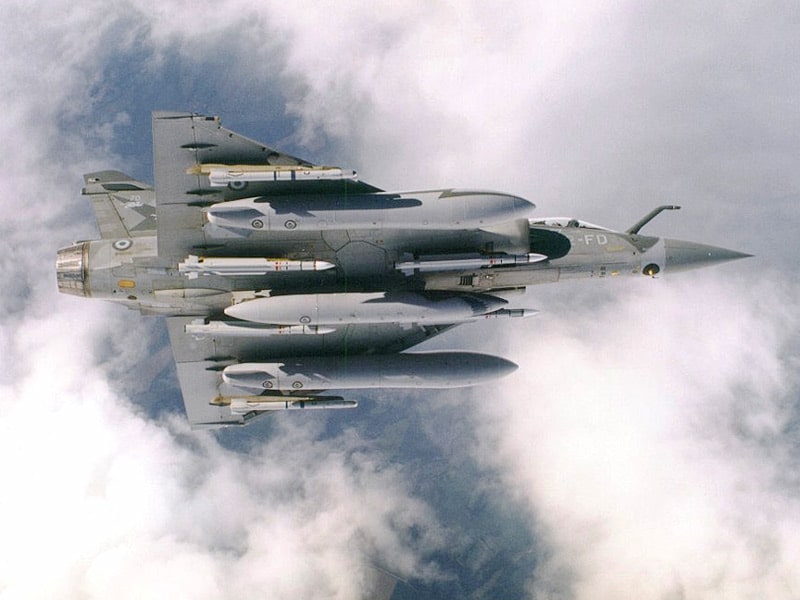
In response, fleet planning has opened up the necessary long-term perspective. The IAF is now considering postponing the initial retirement of the Mirage 2000s to 2038/2039, while Dassault Aviation has confirmed original equipment supplier support beyond 2035. This continuity of maintenance and measured upgrades provides a useful window for integrating more ambitious armaments than the MICA package alone, without disrupting the established technical and logistical balance.

However, it was the surface-to-air engagements conducted in 2025 that best illustrated the operational benefits of extreme ranges supported by a coherent information chain. On May 7, an Indian S-400 battery shot down a JF-17 at nearly 200 km, and then, at the end of May, a Saab 2000 Erieye at around 300 km. With the 40N6E, designed for ranges up to 400 km against AEW&C, nearly 300 km were covered in 3 minutes 30 seconds to 4 minutes 30 seconds, and the onboard alert was only triggered 30 to 40 seconds before impact, a sign of perfectly coordinated detection and control.
By equipping the Vajra with the Astra Mk2 BVR missile, the "2000" joins the group of long-range interceptors.
While the ramp-up of the Astra Mk1 firmly established the national program, it is the launch, on April 17, 2026, of the joint IAF/DRDO study that is now the focus of attention. This study aims to define the avionics suitability of the Mirage 2000, sensor synchronization, data link robustness, and the formalization of firing protocols, in order to transform increased range into a tangible advantage, while respecting the mission architecture and the platform's survivability.
This article is now reserved for subscribers.
Articles in this section Defense News are fully accessible during 72 hours after their publication. Beyond that, they join the feed reserved for MetaDefense subscribers.
Subscription can be cancelled at any time, starting from €1,99.

