

A Defense News investigation identified at least 167 Russian military-affiliated cargo flights between March 2025 and April 2026 connecting Russia to Algeria. This flow places the North African country among Moscow's key logistics hubs for operations southward. Some of the flights connected airfields associated with United Aircraft Corporation (UAC) to Algerian bases, coinciding with the appearance of Russian fighter jets in Algerian airspace in recent months. This flurry of activity is part of a broader context of aircraft and military equipment deliveries to a long-standing Russian partner.
Defense News reports having tracked landings at Oum El Bouaghi, Aïn Oussera, Annaba, Laghouat, and Béchar, among other entry points. Several flights coincided with local sightings of new Russian aircraft over the Algerian countryside. The routes often originated from airports linked to UAC, the Russian state-owned military aircraft manufacturer, and then branched off into Algeria after internal connections. This pattern was observed repeatedly throughout the year under review, establishing a continuous chronology rather than sporadic deployments and suggesting an established logistical network.
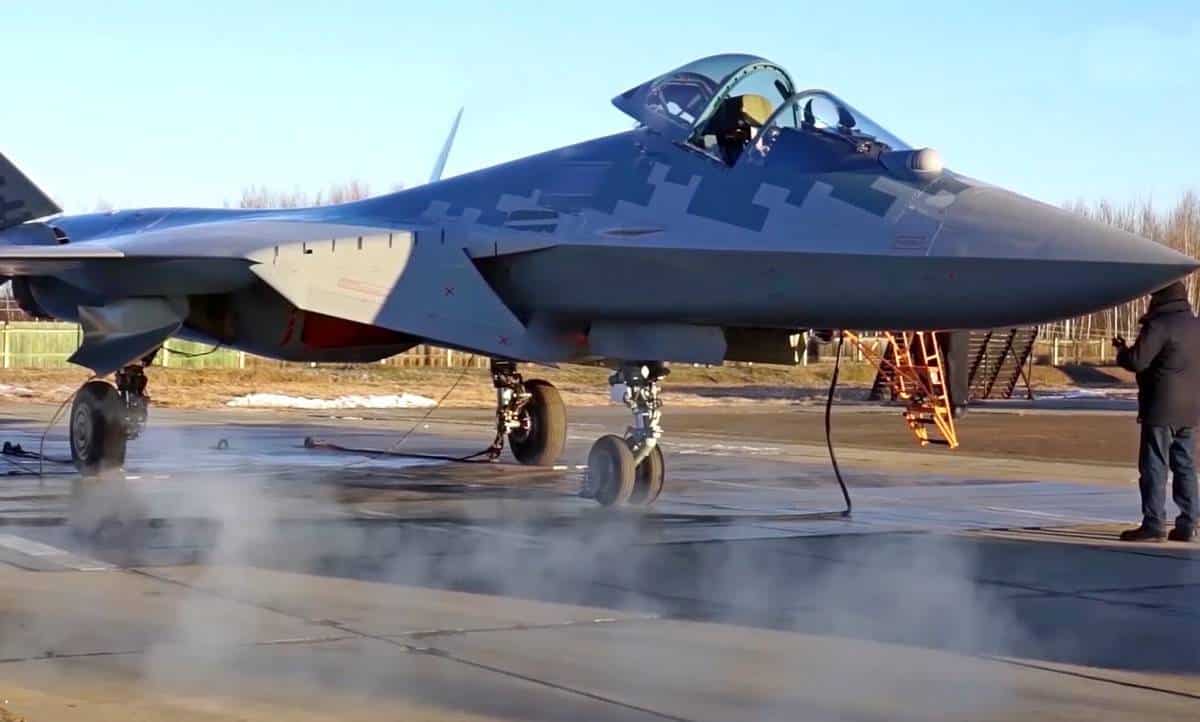
According to available information, deliveries of fifth-generation Su-57 and Su-35 fighter jets to Algeria are underway. The country already operates approximately sixty Su-30 multirole aircraft and around forty MiG-29s. When questioned about the nature of these flights, Margaux Garcia, senior analyst at the American organization C4ADS, found the explanation of a recent arms shipment convincing. "I think that's a fairly reasonable explanation for these flights," she stated, referring to the routes connecting Russian industrial sites to Algerian bases.

Aircraft bound for Algeria visited Komsomolsk on the Amur River, the sole production site for the Su-57 and Su-35, at least a dozen times during the observed period. Eight stops were recorded at Irkutsk Northwest, the heart of the Su-30 production line, and at least twenty-eight at Yeltsovka near Novosibirsk, the center of Su-34 production. Approximately two-thirds of the flights transited through Mineralnye Vody Airport in the North Caucasus before departing for Algeria. This stopover reduces the distance for Ilyushin Il-76s, whose reasonably loaded range is around five thousand kilometers.
Some aircraft deactivated their ADS-B transponders or incorrectly declared their routes, especially when departing from Algiers, where public tracking was lost southward while other nearby traffic remained visible. An air freight insider described this practice as deliberate and known to the crews. It complicates the open traceability of cargo and increases the likelihood of clandestine shipments. This modus operandi was observed on other clandestine routes studied by the same investigation, which supports the hypothesis of coordinated use of these techniques for sensitive flows.
Public indications have multiplied regarding the Su-57s destined for Algeria. In February 2025, state television mentioned the purchase of six Su-57Es and announced the first two deliveries during the year. In November, the director general of the Algerian Air Force (UAC) indicated that two aircraft had just been delivered to a foreign partner, without naming them. Algiers has not confirmed this. Two separate videos, one from mid-March and the other during Easter weekend, show formations of Su-57Es in Algerian airspace, increasing the likelihood of an operational presence.
Industrial availability remains constrained. The London-based Royal Institute for United Services estimates that by the end of 2025, Russia had produced 21 Su-57s, with potentially one aircraft lost. A reported fire at the Komsomolsk-on-Amur aircraft factory caused floor subsidence, according to recent images, suggesting significant damage. Algeria is presented as the first confirmed foreign customer for the Russian stealth fighter, with a contract often estimated at 14 aircraft. However, it remains uncertain how many have been received and at what pace deliveries will follow.
The Russian-Algerian military-industrial partnership is part of a broader relationship. According to the Stockholm International Peace Research Institute, 73 percent of Algerian arms imports came from Russia between 2018 and 2022. El Djeich, the magazine of the Algerian Ministry of Defense, did not detail the modernization of the air force in June 2025 but published a directive from Chief of Staff Saïd Chanegriha. "Optimizing the combat and operational performance of these forces is a priority requirement in order to achieve total control of our airspace," he stated.
Tracking data also suggests a transit role to West Africa. Between July and September, two Ilyushin Il-76 aircraft belonging to the Russian company Gelix, registered RA 76373 and RA 76360, made eight round trips between Russia and Conakry via Algiers. In January 2025, the French daily Le Monde documented the unloading in Conakry of more than 2,000 tons of military equipment by two sanctioned Russian cargo ships, before a road convoy to Mali. This pattern illustrates the use of Algiers as a hub for shipments beyond its borders.
On the export front, Rosoboronexport announced new contracts for the Su-57E at the DSA exhibition in Kuala Lumpur on April 15, 2026. At the same time, reliance on support hubs like Mineralnye Vody and third-party intermediaries appears crucial for projecting cargo to Africa and the Middle East, given the practical range of the Il-76. The frequency of flights between Russia and Algeria and repeated visits to production sites remain compatible with a logistical flow of Su-57 and Su-35 aircraft deliveries to the Algerian armed forces.

