

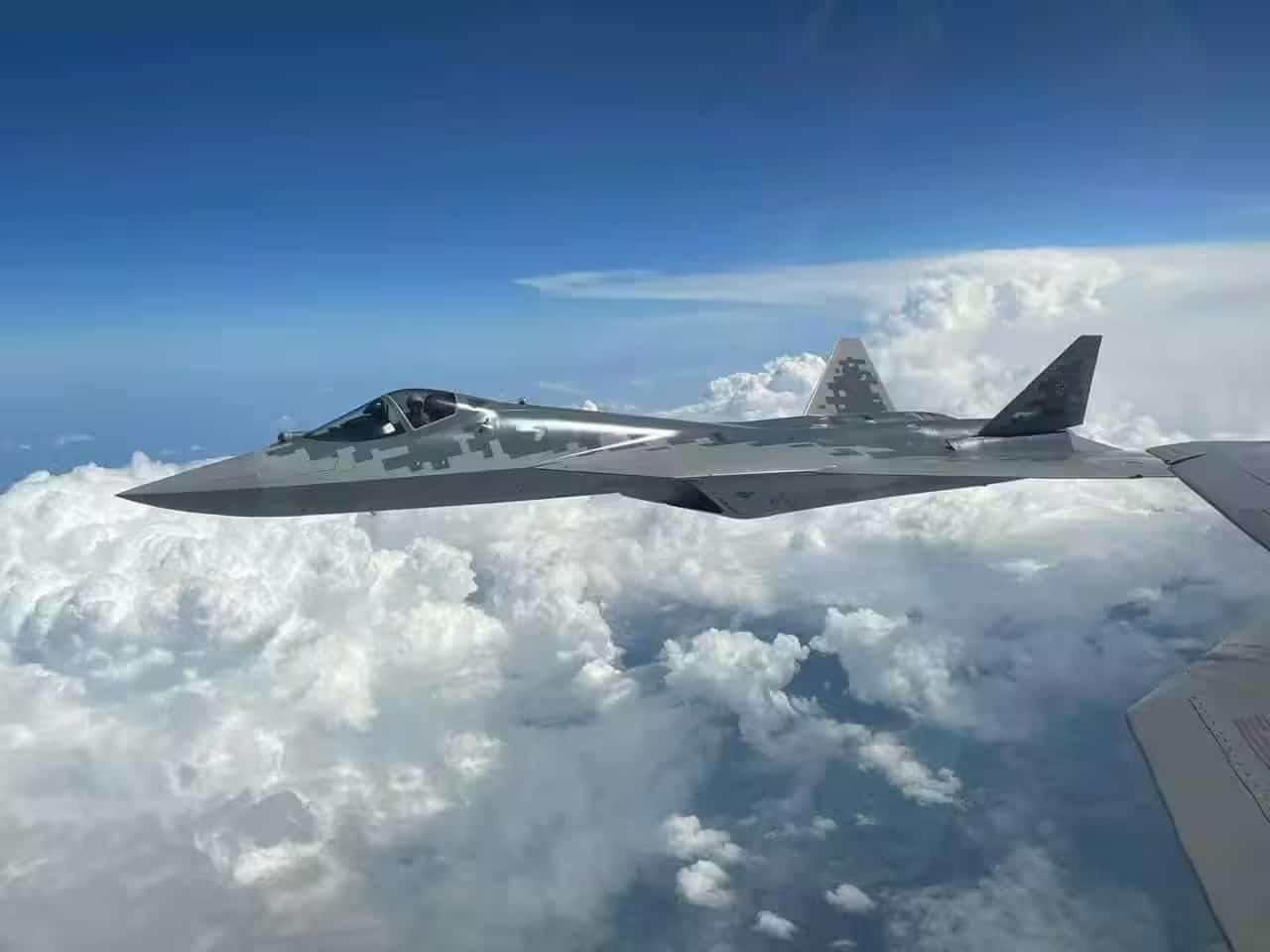
On May 1, the Ukrainian Armed Forces General Staff announced it had conducted an attack on an airbase hosting Su-57s located about 1,700 kilometers deep within Russian territory. This announcement refers to the operation carried out on April 25 against the Shagol military airfield in the Chelyabinsk region. According to Kiev, the target aimed to hit ground aircraft belonging to the Russian Aerospace Forces. The announced distance places the target well beyond the areas typically struck, indicating that this action is part of a series of deep attacks launched since late April.
UNITED24 and official Ukrainian sources stated that several fifth-generation Su-57 fighters and at least one Su-34 were hit during the attack on Shagol. The General Staff indicated that damage assessment is ongoing, without providing specific figures. Kiev presented this operation as aimed at reducing Russia's capability to strike civilian and critical infrastructure in Ukraine. The Russian Aerospace Forces, for their part, have not confirmed losses at the affected base, and no independent images have yet documented the extent of the alleged damages.
The operation has been attributed to units dedicated to unmanned systems of the Ukrainian forces. Given the remoteness of Shagol, the action suggests the use of long-range drones or a coordinated strike package, though Kiev has not provided details on the exact vectors used. The announced range, exceeding 1,700 kilometers from the Ukrainian border, demonstrates a capability to reach Russian air facilities located far from the frontline. The technical characteristics of the means employed and their trajectories have not been disclosed at this stage.
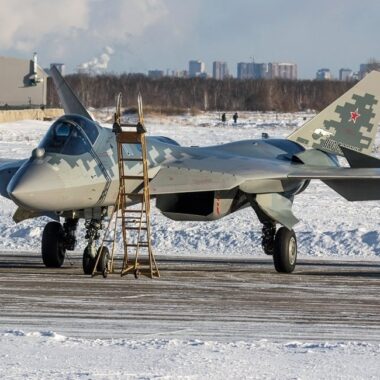
According to the analysis group Sonyashnyk, Russia has intensified the operational use of Su-57s since August 2025 and broadened the mission spectrum of this aircraft. The Russian Aerospace Forces have indeed multiplied the deployments of these fighters in the theater, in addition to aircraft of earlier generations. The possible presence of fifth-generation fighters at Shagol during the April 25 attack is reported by Kiev but still requires independent verification. Potential damage to these airframes, if confirmed, must be assessed in light of the fleet's repair capabilities.
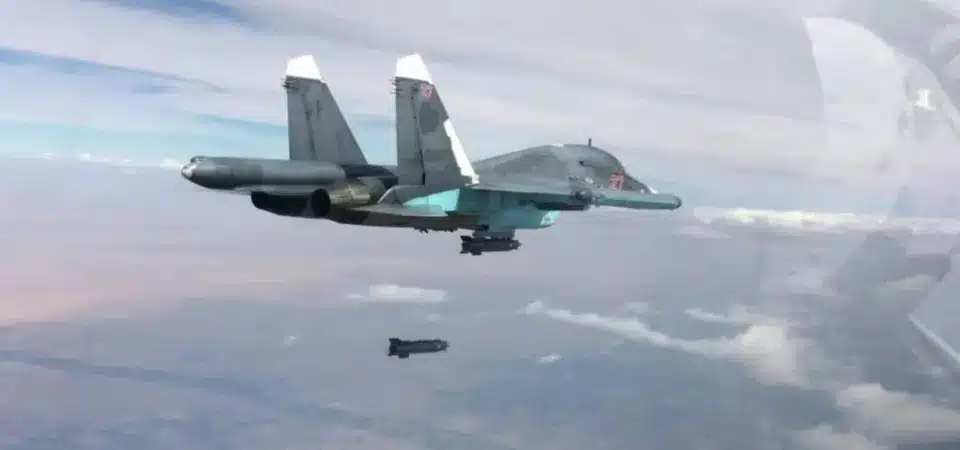
The Main Directorate of Intelligence of the Ukrainian Ministry of Defense reported in April that about one-third of the companies supplying subsystems and parts for the Su-34 continued their activities. According to this document, some suppliers maintain access to foreign components and technologies despite the sanctions regimes, which supports the maintenance and part of the production for this attack aircraft. This logistical continuity, reported by Ukrainian services, sheds light on the persistent role of the fighter-bomber in ground strikes, including from bases far from the front.
Meanwhile, a major fire recently struck the Komsomolsk-on-Amur aircraft factory in the Russian Far East. Floor collapses and the destruction of at least one production hall were observed. This facility produces, among others, Su-35S and Su-57 fighters. Satellite images released after the incident show part of the roof of the damaged building collapsed. The circumstances of the fire have not been detailed, but the visible extent of the damage suggests significant repair work will be necessary before activities can resume normally.
The specialized portal Militarnyi indicates that building number 46 was particularly affected and that approximately 300 components related to the Su-57 were manufactured there. According to this source, the severity of the damage in this building could impact the supply chain needed for the production process of both aircraft. The available images confirm significant structural destruction at the roof level, without allowing for an assessment of the quick reuse of the tools and lines concerned at this stage.
In 2025, this factory reportedly delivered several batches of Su-35S and two Su-57s to the Russian Aerospace Forces. If the production capabilities depending on the destroyed sections cannot be quickly replaced, these timelines could be delayed or partially compromised. Russian authorities have not communicated any new delivery planning following the fire. The consequences for operational units will depend on the duration of the unavailability of the affected workshops and the options for transferring loads to other industrial sites.
A report from the Royal United Services Institute published in late 2025 estimated the total Russian production of Su-57s at 21 units, with one aircraft potentially lost. In this context of a numerically limited fleet, allegations of damage inflicted on Su-57s at the Shagol airfield, if confirmed, would weigh on the availability of this type of aircraft. Ukrainian authorities maintain that on-site assessments are ongoing, and no independent source has yet provided definitive elements about the state of the affected airframes.

