While the MGCS program remains uncertain, its schedule now reaches the deadline of 2045 and the French Leclerc tanks will have to be withdrawn from service from 2037, the Ministry of the Armed Forces has integrated the need for an intermediate generation tank to bridge the gap in the revision of the Military Programming Law 2024-2030, presented a few days ago.
This realization, which many specialists have been calling for for several years, is nevertheless only the first step in a complex and highly constrained process, within a deteriorating geopolitical, budgetary, and industrial landscape. The question now arises, therefore, as to the options available to French decision-makers to ensure a smooth transition away from the Leclerc line starting in 2037.
The replacement of the Leclerc tank in the French Army will begin in 2037.
The Leclerc tank, produced by Nexter (now KNDS France) from 1989, has been delivered to the French Army in 406 units. Approximately 200 remain in service equipping French armored regiments and have been undergoing modernization to the XLR standard since 2023, in order to remain in service until the end of the decade. Their withdrawal, starting in 2037, has recently been deemed inevitable by the Army General Staff, ruling out any further extension to bridge the gap to 2045 and the hypothetical start of MGCS deliveries.
Indeed, the Franco-German program is currently facing a triple threat simultaneously: the extreme tensions affecting the SCAF program, to which it is politically closely linked; significant remaining differences between the expectations of the Army and the Bundeswehr; and the German industrial trajectory which, with the Leopard 2A8, the KF51 Panther and the future Leopard 3, has a national offering to respond to the increase in threat, but also in the market, especially in Europe, over the next decade, and at least until 2045.
This situation is not new, strictly speaking. Many French experts have, in fact, for several years, pointed out the limitations of the XLR modernization of the Army's Leclerc tanks in the face of the evolving threat and called for the design of an intermediate generation model, both to respond to this threat and to ensure the preservation of French industrial skills in this field, pending the MGCS program.
In this respect, the announcement of the integration of an interim tank program into the 2024-2030 Military Programming Law (LPM) update represents a highly anticipated shift in the French position. However, it does not constitute a solid trajectory. Indeed, while the impetus to replace the Leclerc tanks starting in 2037 is included in the legislative update, no budget is allocated to this task until 2030, which obviously greatly limits its scope and reduces the window of opportunity by 30%, from 10 to just 7 years.
The MGCS program remains uncertain, but not before 2045
In this context, it is understood that the overall framework of this program will be marked above all by numerous and important constraints which must be taken into consideration in order to evaluate the options which are actually possible and realistic in order to respond to them.
The first constraint is obviously budgetary. Indeed, despite a further announced increase in the defense budget of €3,5 billion in 2026, and a budget target of almost €75 billion annually in 2030, the French Armed Forces budget remains under very strong constraints, between the armament and deterrence programs to be financed (SCAF, SNLE3G, PANG, MAWS, SCORPION, Rafale F4 and F5, combat drone…), the unprecedented effort of €8,5 billion for munitions announced a few days ago, and the introduction of a conscription halfway between volunteering and Scandinavian-style chosen conscription, backed by a national guard expected to increase from 40,000 to 80,000 men under the LPM.
We understand the lack of room for maneuver for the ministry in terms of budget until 2030, while the immediate objective is to recapitalize critical resources as quickly as possible (air and missile defense, artillery, long-range strike, drones and anti-drone warfare) to respond to a possible confrontation in the east, against the backdrop of the announced American disengagement from Europe.
The second constraint is industrial. Indeed, while the French land industry is still capable of major technological advances, such as with the ASCALON cannon, it has not assembled any tanks or heavy armored vehicles for 15 years now, since the delivery of the last Leclerc tanks from the United Arab Emirates. It no longer possesses a true industrial assembly line dedicated to heavy tracked armored vehicles.
Even worse, it has not designed any tracked armored vehicles since the Leclerc in the early to mid-1990s, and the industrial supply chain has also largely withered, causing several experts to doubt the national capacity to produce a chassis, and especially an engine and transmission for a heavy battle tank, one of the mechanical assemblies subjected to the most intense stresses ever designed.
Finally, the third constraint is none other than the timetable imposed by a deferral of investments from 2030, and a delivery deadline that must absolutely take effect in 2037, otherwise the Army would lose its ability to guarantee the permanent mobilization of an armored/cuirassier regiment of its operational contract.
Put together, these 3 constraints do not add up, they multiply because each one increases the other two, whether it is the budget which draws both the time constraint and limits the scale of investments, the schedule which will force us to turn to ready-made technological building blocks, and which will impose a certain sizing of the industrial tool to respect the necessarily compressed ramp-up, and finally, the industrial constraint, which imposes heavier investments, to reconstitute the line and supply chain, and longer delays, for the same reasons.
It goes without saying that baldness should be a major factor in selecting the Armament Engineer to whom this project will be entrusted. Because if he isn't already bald, there's no doubt he will become so, from tearing his hair out trying to solve this programmatic puzzle.
Fortunately for him, and also for the Army, solutions exist. To be precise, there are three, each with its own advantages, but also its constraints and consequences to bear.
Le Leopard 3 offers an economical and secure alternative to France, but the associated cost will be high
Addressing the three-pronged challenge of limited budgets, shortened schedules, and failing industrial infrastructure may seem insurmountable, especially from a French perspective. However, for many of its neighbors, this is simply a "normal" situation, requiring a well-known solution: international orders with local assembly or industrial offsets.
This is how Rome negotiated with Rheinmetall the domestic production of more than 200 Panther and almost a thousand KF-41 Lynx aircraft at Leonardo's industrial sites, and that is how Warsaw obtained significant technology transfers from Seoul to assemble the future K2PL and other K239 aircraft on site.
The subject had also been raised a few months ago by the previous Director General of Armaments, Emmanuel Chiva, when he did not hesitate to consider ordering Leopard 3 Germans assembled in France, with some industrial compensation from Berlin, to meet this need while respecting the constraints.

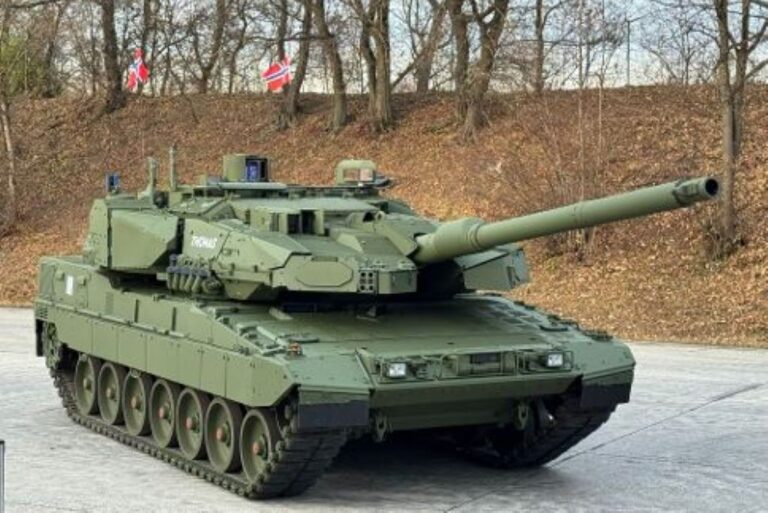
Indeed, such a solution has many advantages. First, it respects both the budget and the time frame, since the Leopard 3 will only be available in 2030, according to KNDS Deutschland, and all R&D is being handled by Berlin and German industry.
Next, pure industrial investments, particularly in the supply chain, will be limited. Finally, the Leopard 3 will undoubtedly become a de facto European standard, like the Leopard 1 and 2 before it, which will simplify the maintenance and upgradeability of the armored vehicle. It is precisely for these reasons that Norway, the Netherlands, Sweden and the Czech Republic acquired the Leopard 2A8 these last two years.
However, in the specific case of France, such an option also comes with numerous constraints and certain compromises. Paradoxically, among these constraints is budgetary sustainability. Indeed, while R&D costs and industrial investment are lower, the share of added value produced in France per armored vehicle delivered is also much smaller, probably around 30 to 40%, in the best-case scenario.
Therefore, with a budgetary return—that is, the difference, for public finances, between investment and direct and indirect tax and social security revenues—of around 50% in France, the net residual state cost remains at 80 to 85% of the total cost, the remainder being absorbed by German industry and supply chains. Even worse, France will not be able to export the Leopard 3 assembled on site, which will deprive it of additional revenue.
It is worth recalling that the French defense industry exports on average more than 40% of its national production. Therefore, the cost to the State, representing 60% of the total, is largely offset by the 50% applied to 100% of national production, leaving a net visible State cost of only 10% of the total cost, or 17% of the national investment. It is thus clear why designing and manufacturing domestically is so advantageous, thereby minimizing the remaining cost.
Beyond the budgetary aspect, turning to the Leopard A German third-party acquisition would constitute a more than serious threat to France's remaining industrial and technological expertise in the field of main battle tanks. If dependence on Berlin is politically validated through the MGCS and SCAF programs, within the framework of the Leopard 3, it would nevertheless be unilateral and not balanced by reciprocal dependencies, which could constitute a serious problem for France and its more interventionist profile than that of its neighbor across the Rhine.
Above all, France's legitimacy to participate in the MGCS program as a main partner, on equal footing with Germany, would be more than threatened, providing further ammunition to critics of this balancing act in Germany. Far from strengthening the Franco-German partnership, such a measure would instead tend to weaken it by widening the gap between the two defense industrial and technological bases, as well as in terms of addressable market.
The EMBT replaces the Leclerc Evo as the preferred national solution for the intermediate generation
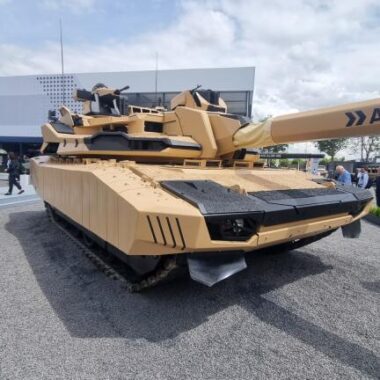
The second option that could be considered in France to address this problem would be a national one, relying on the skills demonstrated by KNDS France and its partners to design the Leclerc Evo prototype, as well as the EMBT demonstrator, both presented at the Eurosatory trade fair in June 2024.
At that time, the Leclerc Evo could appear as a solution that could be mobilized in the short term to advantageously take over from the Leclerc by 2030, in the face of an operational need still largely erased by budgetary constraints and an international market less competitive than it is today.
The lack of response from the Ministry of the Armed Forces and the DGA (French Directorate General of Armaments) regarding the Leclerc Evo in 2024 has effectively doomed this prototype. Indeed, aiming for entry into service in 2037, it would be absurd to remain with this model, which is still heavily influenced by the paradigms of the original Leclerc. Fortunately, this is not the case with the second model, the EMBT.
The EMBT version 2024 already ticked many of the boxes framing the emerging intermediate generation of tanks, with the Leopard 3, the K2PL, the K3 or even the M1E3. It had, in fact, a fully robotic lowered turret, armed with an ASCALON 140 cannon much more powerful than the current 120 mm, an APS hard-kill/soft-kill for its protection, an automated turret coupled with a range of drones and pod missiles for drone and infantry threats, and a "vetronic" system coupled with SCORPION communication layers for a very advanced perception of the tactical environment.
In practical terms, the EMBT only lacked hybrid-electric propulsion and enhanced multispectral stealth capabilities, achieved through active or passive means, to become the benchmark for this emerging intermediate generation. Therefore, the EMBT is clearly an excellent candidate for the Army's interim needs. Moreover, its domestic design significantly enhances its export and budgetary potential, following the same reasoning as previously established.
However, it too is not without its weaknesses and risks. Firstly, because, as mentioned earlier, the French defense industry and supply chain in this area will have a long way to go. It is also highly likely that, in this scenario, KNDS will be forced to turn to the German engine manufacturer MTU to equip its EMBT, and to RENK, also German, even though the products are manufactured in France, for the transmission.
This dependence will partially dilute the budgetary return, but should not pose insurmountable export difficulties. On the contrary, very aware of the limitations of the German image in certain countries, particularly in the Middle East and South America, KNDS and German industry may well see this French EMBT as the perfect complement to the Leopard 3 to expand the addressable market, at least until it sets foot on the European market.
But the biggest flaw in the EMBT option is above all the budgetary equation. Indeed, the investments in design, production, testing and trials, then the industrial investments necessary to deliver the first EMBT will necessarily be very high, amounting to several billion euros, an amount that will have to be amortized on only 200 units, since increasing the size is not on the agenda according to the Ministry of the Armed Forces.
The solution to improve this sustainability would have been to turn to a key partner, with the United Arab Emirates at the top of the list, as the sole export customer for the Leclerc tank, seeking industrial investment in the defense sector to diversify its economy, and possessing ample resources. Unfortunately, the failure of Franco-Emirati negotiations regarding the Rafale F5, centered around a program…
Changing paradigms: moving from MBTs to medium tanks to escape an unsolvable equation
There remains a third avenue that France could explore in this matter. Already mentioned on this site, it would be based on a paradigm shift, drawing on the lessons learned from Ukraine. Indeed, whether it concerns older generation tanks, such as the T-64 and the Leopard Ukrainian 1A5s or Russian T-72s, or more modern tanks, such as the Leopard 2A6, M1A1 and T-90M, all have shown a very high vulnerability to enemy drones, missiles and precision artillery strikes.
The heaviest tanks, like the Abrams, the Leopard The Challenger 2, or the Challenger 2, also demonstrated significant mobility limitations, whether in terms of movement over soft terrain, obstacle crossing, or rail transport. While a poorly protected tank's effectiveness is reduced, a tank that fails to reach the combat zone is simply rendered ineffective.
These lessons are already being taken into account by intermediate-generation tank programs. Thus, the Leopard The K3 and the M1E3 are both designed to be nearly 10 tons lighter than current models, weighing in at around 53 to 55 tons. The K3 has made stealth the cornerstone of its operational advantage, while all new models, including Russian and Chinese ones, now incorporate active protection systems, both soft-kill and hard-kill, to enhance their survivability.
China, for its part, presented last September a tank that pushed these paradigms of mobility, stealth and active protection even further in favor of survivability, and therefore armored maneuverability, with the Type 100. Indeed, the new Chinese tank is not to be classified in the category of battle tanks, or heavy tanks, but in that of medium tanks, with a combat mass listed between 40 and 45 tons.
This same observation could guide France's response to its current needs, particularly by drawing on the French land engagement doctrine, which emphasizes maneuver and mobility far more than firepower and passive protection. It was this same approach that gave rise to the Caesar howitzer in the early 1990s, even though everyone else, until recently, swore by tracked artillery in armored cases. The war in Ukraine, in fact, demonstrated the full relevance of the French model, which is now far more often copied than ridiculed.
Indeed, a medium tank, weighing 43 to 45 tons in combat, powered by a 1,200 hp hybrid engine, equipped with a robotic turret armed with a 120 mm Ascalon, drones and missiles for medium and long-range engagement, a high-performance volumetric APS system and advanced active and passive stealth, would offer the Army not only effective combat potential.
It would thus perfectly complement the capabilities of European allies, whether in Europe, thanks to discreet crossing and bypassing capabilities opening up spaces inaccessible today, or in more exotic theaters, to which it would be better suited to operate on soft and unstable terrain, from the African desert to the Himalayan slopes.
This original positioning would allow the French industry to explore new export opportunities, by approaching the MBT market saturated with offers, with a price argument and high operational potential that would not be unlike the competitive positioning of the Caesar against the PzH 2000, opening up new potential cooperation opportunities that are currently closed in the field of MBTs.
Finally, a lighter model would fit perfectly into the category of vehicles accompanying and supporting mechanized maneuvers, whether they be heavy infantry fighting vehicles, infantry engagement vehicles, armored support vehicles (ambulance, command, engineering, communication and electronic warfare) or even anti-aircraft and anti-drone defense vehicles.
The combination of a lower unit price, broader industrial potential, and a less competitive international market makes industrial investment far more sustainable and less risky, expanding the number of carrier-based systems for the French Army and its potential partners. Furthermore, and this is worth noting, while France's lack of MBT production over the past 15 years has put it at a disadvantage in the heavy tank market, the Caesar's commercial and operational success could influence such a program due to their shared paradigms.
Conclusion
As we can see, the announcement of the inclusion of an intermediate-generation tank program in the 2024-2030 Military Programming Law update, while confirming an awareness of the limitations of the Leclerc XLR in the face of evolving threats, is still far from providing a solution to this highly complex issue. Even worse, by not allocating any budget specifically for this requirement, defined for 2037, during the 2026-2030 period, this awareness ultimately only serves to further restrict an already limited timeframe, both industrially and financially, making its implementation even more challenging after this deadline.
Several options can be proposed to meet these demanding specifications, each with its own advantages, constraints, and risks. The acquisition of Leopard Three German tanks, possibly assembled in France, would probably be the simplest and cheapest solution in the short term, but it would significantly threaten the sustainability of the skills of the French industry in the field of tanks, and more broadly tracked armored vehicles, while definitively excluding Paris from this international market.
KNDS France's EMBT, presented in 2024 at the Eurosatory trade show, represents the most conservative response, respecting industrial, technological, and military capabilities, as well as France's position on the international stage. It is also the most expensive option and the most likely to fall outside the 2037 timeframe, at a time when certain international partnerships now seem out of reach for potential cooperation.
The last option, the least trivial, is based on a paradigm shift based on Ukrainian lessons, developing not an MBT but a medium tank, 10 tonnes lighter, much more mobile, stealthy and protected by APS, in order to open not only a new less competitive market — only the Chinese Type 100 being present — but also tactical opportunities to revive mechanized maneuver thanks to this unique combination of capabilities, to complement the traditional offering of European armies in this area.
It remains to be seen, now, where the balance of French arbitration in this area will tip, between European standardization amounting to an abandonment of sovereignty, conservatism in capacity and industry requiring higher resources, or originality and innovation, without any guarantee of achieving the same result as with the Caesar.