


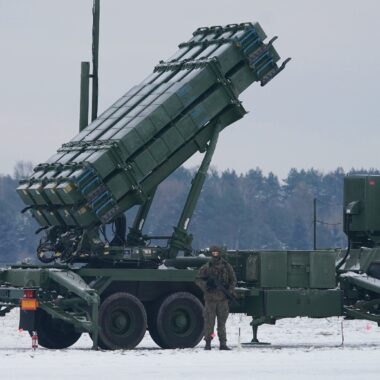
Switzerland has suspended payments related to the purchase of Patriot air defense systems and mandated five manufacturers on May 4 to present alternatives. According to the Federal Department of Defence, Civil Protection and Sports, responses are expected by the end of the month, before a decision by the Federal Council. This move comes as Bern now demands legally binding American delivery deadlines before any resumption of payments. Defence Minister Martin Pfister stated that outright cancellation of the American order is among the scenarios being considered.
Signed in 2022, the Swiss contract concerns five Patriot batteries comprising seventeen launchers, estimated at 2.2 billion dollars. The initial schedule anticipated deliveries between 2026 and 2028. In July 2025, U.S. authorities officially redirected delivery priorities in favor of the Ukrainian armed forces, pushing the deadline back by four to five years. The first deliveries are now not expected before 2030 or 2032. In autumn 2025, the ministry suspended payments and then, in April 2026, imposed the condition of enforceable American deadlines to restart financial flows.
At one point, the Franco-Italian SAMP/T NG system was identified as the preferred option to replace the Patriots. An official request was sent to the relevant manufacturers. However, they clarified that if Switzerland were to place an order today, the first unit could not be delivered until 2029. Production slots are already committed to other customers, including for Ukraine, limiting the possibilities for acceleration. This perspective led Bern to re-evaluate the market beyond the Franco-Italian offer to widen its decision-making margins.

The Federal Department of Defence has thus relaunched a broader consultation including Germany, Israel, and South Korea. The German manufacturer Diehl Defence proposes the IRIS-T SLX, targeting market entry around 2029. On the Israeli side, David's Sling covers greater ranges, up to approximately three hundred kilometers according to public specifications. Seoul promotes the Cheongung II, credited with about forty to fifty kilometers, as well as the L-SAM, reported at one hundred fifty to one hundred sixty kilometers, both supported by the Hanwha conglomerate.
Armasuisse, the federal office responsible for defense procurement, has sought information from authorities in Germany, France, Israel, and South Korea. The priorities expressed by Bern revolve around delivery times, costs, performance, and the share of production in Europe, ideally in Switzerland, according to Kaj-Gunnar Sievert. The preference for European origin has been reaffirmed during discussions, while still leaving open the possibility of non-European offers. Manufacturers are invited to specify firm slots and an industrial integration scheme compatible with Swiss capabilities. Bern has also mentioned the purchase of a second long-range ground-to-air system, preferably European.
Contractually, Martin Pfister confirmed in early April that the cancellation of the American order remains a possibility. In case of termination, the status of the approximately six hundred fifty to seven hundred million francs already paid is not clearly established at this stage. The mechanisms of the Foreign Military Sales program, which pools payments from purchasing states within a fund managed by Washington, reduce the financial maneuvering room for buyers, according to information communicated to Parliament. This situation has triggered critical reactions from several political groups.
The Federal Department of Defence also indicated in March that the announced delay of four to five years comes with significant additional costs. Official Robert Scheidegger specified that estimates now take American inflation into account. Swiss authorities characterized Washington's decision as necessitating serious debate, highlighting the importance of a credible timeline to preserve planning. Several aspects of the Air 2030 program have recently been reported as problematic, increasing the pressure to obtain firm assurances on deliveries and the budget trajectory.
In this context, media coverage has intensified. The Swiss daily Tages-Anzeiger has questioned the procurement policy, asserting that authorities seem focused on utilizing the allocated military budget, relying on a paradigm shift provoked by the war in Ukraine. The newspaper noted cost overruns, delays, and planning errors, citing the F-35, Patriot, and SIG Sauer P320 service pistol cases. These criticisms fuel a public debate on capability priorities and the sequencing of programs.
Offers from the five manufacturers are expected by the end of May. The Federal Council will then decide whether to maintain the Patriot contract or pursue an alternative, depending on the delivery commitments and costs presented. At this stage, lacking legally binding American deadlines, a shift to another solution remains possible. Even with a swift decision, the first deliveries mentioned for 2029 would still carry the risk of capability gaps before 2030, which the Department of Defence aims to contain by tightly aligning the industrial schedule and the entry into service.

