

In Berlin, uncertainty surrounding the arrival of the American Typhoon system revives the question of German long-range strikes. New reports indicate that the administration of President Donald Trump is considering withdrawing about five thousand troops from U.S. forces stationed in Germany and has set aside a planned temporary deployment of Tomahawk and Standard Missile 6 under Joe Biden. In Munster, Defense Minister Boris Pistorius stated that this development reopened a capability gap. He recalled that this was a bridging arrangement and asserted that Berlin must now compensate for this shortfall.
In July 2024, the Biden administration announced the temporary stationing in Germany of a U.S. Army interdomain task force equipped with the Typhoon system, also designated Mid Range Capability. This system fires Tomahawk cruise missiles and Standard Missile 6 interceptors from launcher trailers to ensure precise ground strikes while awaiting European alternatives. Recent signals from Washington cast doubt on this perspective, according to the same reports, with no timeline or formal decision made public.
After a major Bundeswehr exercise near Munster, Boris Pistorius described a situation without a definitive solution. He explained that the agreement made at the time by Joe Biden and Chancellor Olaf Scholz served as a temporary bridge while awaiting European systems. He added that its potential abandonment recreated a capability gap. "There are ideas, but no solution at the moment," he said. The Defense Ministry clarified that no definitive cancellation of an American missile deployment had been notified.
How are Europeans preparing their countries for the Russian shock, from Germany to Sweden?"]
During the regular government press conference in Berlin, Secretary of Defense Kornelius Müller outlined a three-pronged approach to equip Germany with long-range strike capability. The first axis is to modernize the Taurus cruise missile stocks and accelerate the development of their successor, Taurus Neo, whose development was approved by the Bundestag budget committee in late 2025. The second axis involves acquiring off-the-shelf systems, with a formal request for Typhoon launchers addressed to U.S. Secretary of Defense Pete Hegseth in July 2025.
According to Kornelius Müller, this second track remains officially ongoing, without comments on a potential American response. In Berlin, the two pathways considered to access Typhoon, either via a U.S. Army unit stationed in Germany or through a direct purchase for the Bundeswehr, are now presented as dead ends. In the immediate term, the ministry emphasizes updating the national inventory. Müller stated that NATO defense plans integrate allied contributions, limiting the short-term impact at the NATO level.
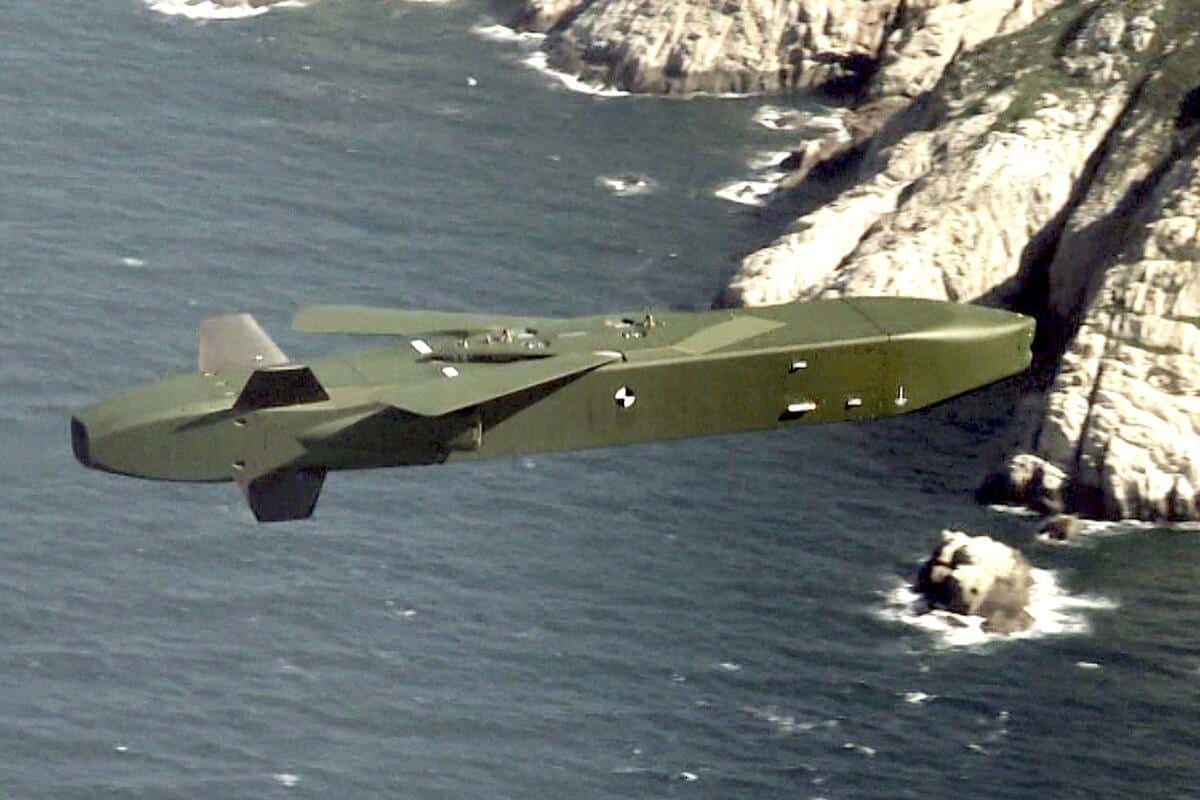
The Taurus, with a range of about five hundred kilometers, constitutes the cornerstone of this national response. Berlin has announced the modernization of its stocks and is preparing to resume development with the Taurus Neo program. Officials present this effort as the first available pillar, awaiting the benefits of a common European endeavor. According to the indications provided so far, Taurus Neo aims for a notable increase in range and would appear only after 2030. No detailed timeline has been published, with officials citing dependence on industrial capabilities and technological milestones.
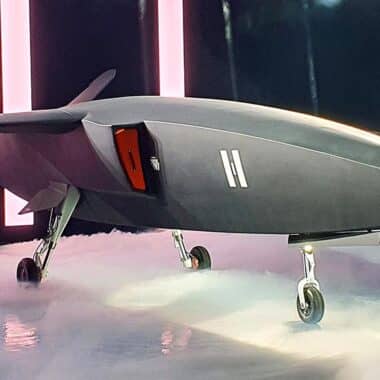
The third element, the European Long Range Strike Approach, is conducted with the United Kingdom. This program aims for strikes beyond two thousand kilometers with an initial focus on ground versions and potential future variations for air and sea. London has indicated a service entry during the 2030s. France has expressed its intention to join the initiative. When asked about the availability of capabilities from ELSA before 2030, Kornelius Müller stated, “I cannot comment on a timeline,” citing technological maturity and industrial availability.
In Munster, Boris Pistorius reminded that Germany launched in 2023, together with the United Kingdom, work on European precision strike systems, and that France now wishes to associate itself with this effort to move forward as quickly as possible. He reiterated the need for a transition instrument, with assistance from the United States or through other means, to quickly fill the capability gap. “We need to see how we can compensate for this,” he insisted, awaiting American clarifications that are still unconfirmed.
On the allied front, Kornelius Müller sought to downplay operational risks. He stated that NATO’s joint planning takes into account contributions from each nation, indicating that the sole German contribution in precision strike does not solely condition Europe’s deterrence and defense. “It is not only Germany's precision strike capabilities that determine Europe's deterrence and defense capability,” he asserted, as uncertainty remains around Typhoon.
The regional context remains tense. Moscow deployed Iskander ballistic missiles in the Kaliningrad enclave in 2018, extending its strike range to the immediate vicinity of the European Union borders. Alongside German efforts, France has budgeted one billion euros to initiate the development of a land-based ballistic missile with a range of approximately two thousand five hundred kilometers, with a stated objective in 2035 and an accelerated timeline discussed for 2030. ArianeGroup has indicated it is exploring manufacturing in Germany, confirming the emergence of European industrial options for long-range capabilities.

