

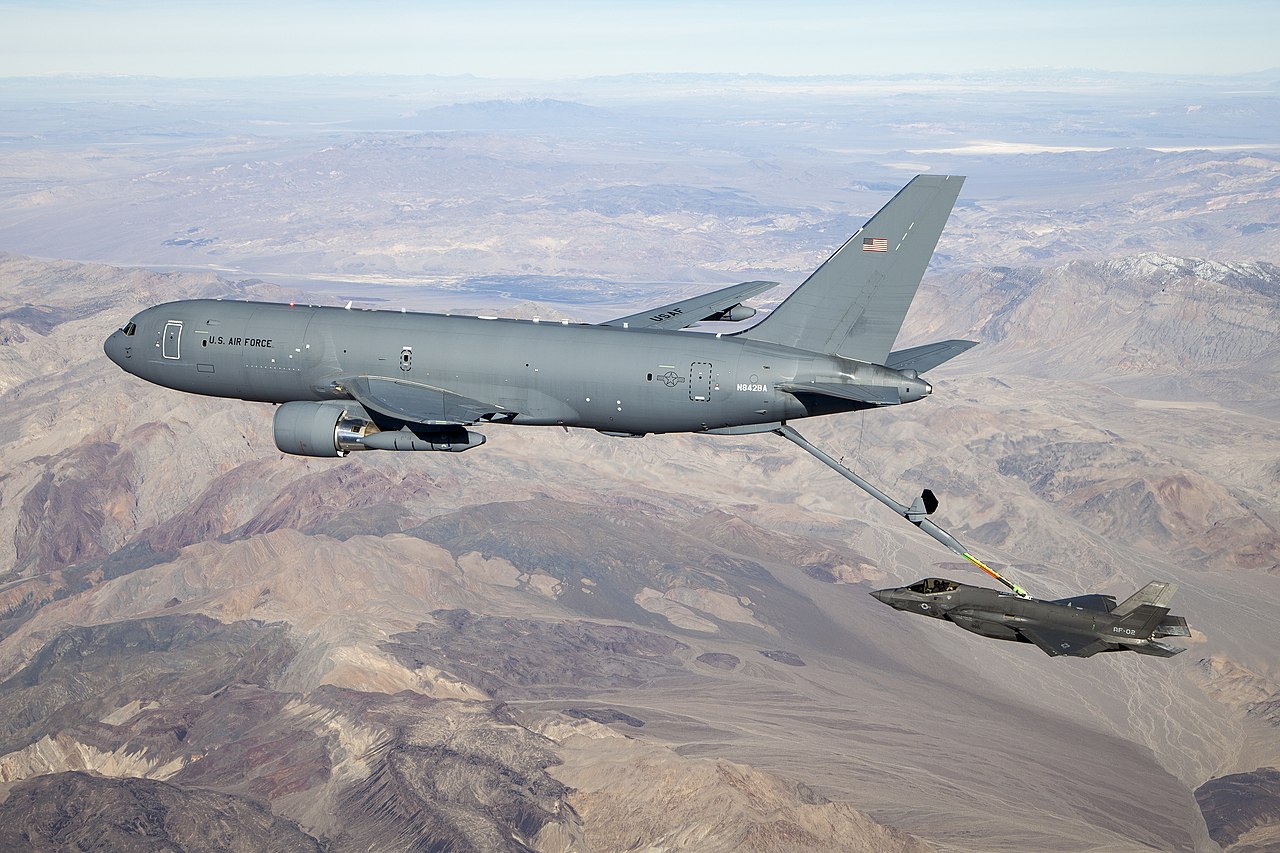
Between a tanker fleet still largely composed of the venerable KC-135 Stratotanker, technical defects that are disrupting the ramp-up of the KC-46A Pegasus, and a threat environment that is stretching the bubble of denial up to 1,500 km, the recapitalization of the US Air Force's in-flight refueling is no longer simply a matter of fleet renewal.
It forces us to make choices now between proven reliability, incremental progress, and delayed disruptions. Behind the inventory figures and industrial milestones, a choice of approach is emerging: disperse, connect, survive, all while maintaining an uncertain and threatening operational pace.
It is this balancing act, at once budgetary, doctrinal and capability-related, that must be read to understand why caution prevails today, when the USAF cancels the NGAS stealth tanker program to engage in the Advanced Tanker System program, while ordering a new batch of KC-46As, despite their shortcomings, to respond to the developments that are reconfiguring the architecture of refueling from the end of the decade until the 2030s.
The KC-135s hold the line as the threat spreads
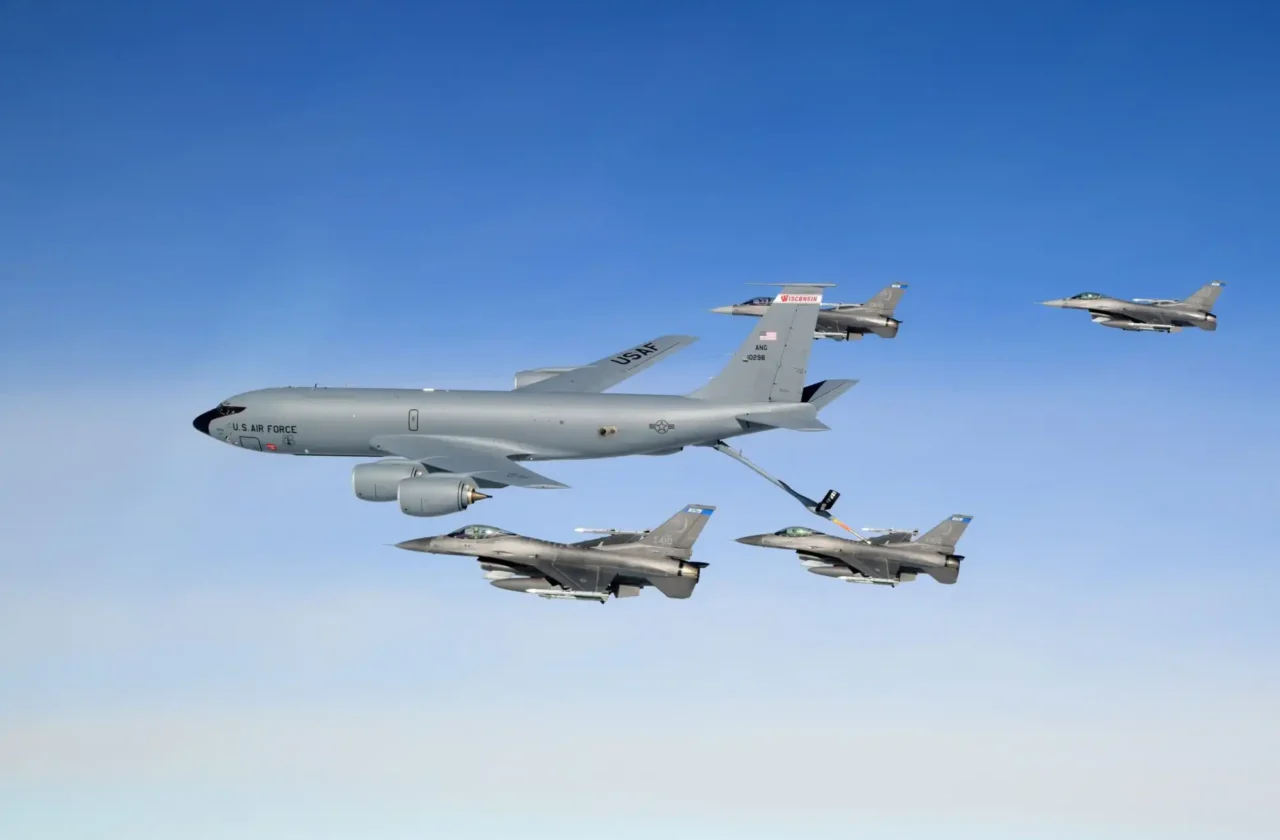
With more than 360 KC-135s still in service, the US Air Force relies, first and foremost, on the mass and robustness of a legacy fleet that alone covers nearly 80% of the minimum mandate of 466 tankers set by Congress, and represents more than 50% of the entire fleet of tanker aircraft in service today in the world's militaries.
However, this foundation also imposes its own timeline, constraints, and scope on any modernization. Thus, the new aircraft must be integrated into an existing fleet, whose reliability is already well established, rather than replacing it outright, in order to ensure daily availability. In other words, the transition to this renewed fleet can only be achieved through controlled additions, not a complete switchover, as long as service continuity remains the primary operational requirement.
In this regard, in April 2026, it was a KC-135, not a Pegasus, that validated the first refueling of the B-21 Raider. The signal sent by this configuration reveals, if any further proof were needed, that when the mission is critical and uncertainties surround newer systems, reliability takes precedence. The persistent difficulties of the KC-46, particularly with its remote vision system, still prevent Boeing's tanker from undertaking sensitive missions and profiles. Hence the deliberate use of a proven tool to achieve a major milestone, without adding any technical or operational risk to an emerging strategic capability.
As of April 3, 2026, 105 KC-46As had been delivered, while three Category 1 deficiencies remained unresolved on this aircraft. This coexistence of sustained deliveries and incomplete statuses is hindering the transition, restricting certain missions, and complicating unit planning. The task facing US Air Force squadrons and planners is all the more arduous, as they must manage the flow of arrivals into the fleet while simultaneously absorbing the corrections required on new aircraft, without compromising the overall availability still guaranteed by the KC-135s, which is gradually declining due to the age of the airframes.
Thus, on February 27, 2025, the discovery of cracks in wing hinges led to a renewed suspension of KC-46A acceptances, subsequently extended to the entire fleet, with a high-priority safety alert. The procedure resulted in enhanced inspections, some repairs prior to return to service, but also increased support costs and delayed deliveries, highlighting the tipping point of a structural defect, especially when it affects a core capability renewal program.
The tensions surrounding the new aircraft are also spilling over into the industrial and financial spheres, with Boeing having accumulated over $8 billion in losses on the KC-46A, including $2 billion in 2024, and a projected unit cost of $321,9 million in 2028, 50% higher than initially anticipated. Consequently, these additional delays and setbacks reduce the room for maneuver to accelerate or incorporate unplanned design changes, and effectively freeze the delivery schedule and the technological framework, precisely when operational needs would dictate moving faster and further.
Indeed, by 2050, the US Air Force anticipates that the combination of very long-range missiles and detection constellations weaving a multi-sensor kill web will render obsolete the very notion of permanent air superiority within a 1,500 km band around the line of engagement—a much greater range than the additional reach conferred to fighter jets by aerial refueling today. Thus, for these tankers, effectiveness will no longer be determined solely by volume, but by survivability, resulting from an aggregation of dispersion, recoil, relay capabilities, and connectivity, all becoming attributes as crucial as the ability to refuel.
KC-46A sales rise while the Next Generation Air Refueling System is halted
By agreeing to increase the KC-46A fleet from 179 to 263 units, despite ongoing deficiencies and a suspension of acceptances in 2025, the US Air Force is primarily buying time and resources, without resolving all the technical uncertainties and the resulting delays, for example, regarding the inspection of wingtip fins. And this time serves only one purpose: to postpone crucial decisions concerning the future of the in-flight refueling function itself, within a technological and operational context undergoing rapid and radical change.
Access the full analysis
This article is reserved for MetaDefense subscribers. A subscription gives you access to all analyses, reports, and insights published on the site.
No commitment. From €1,99.

