

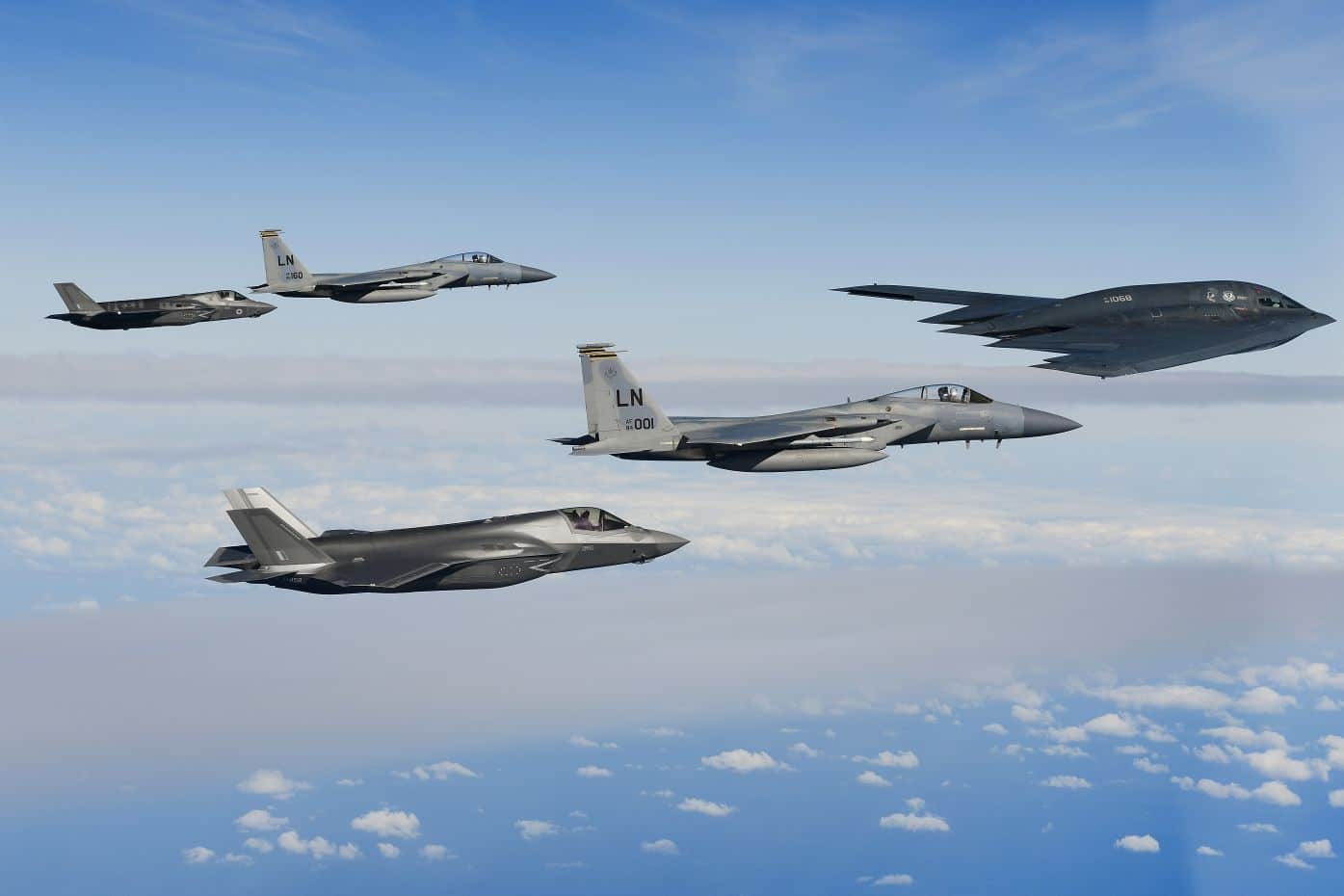
As wargames surrounding a Chinese assault on Taiwan proliferate, the conclusions become increasingly clear and difficult to ignore. Between identified multi-domain vulnerabilities, limitations of forward operating bases, and the resulting dispersion of forces, the American military apparatus remains hampered by its decision-making cycle, its industrial base, and its lack of contingency planning against the PLA, especially with regard to the US Air Force.
Conversely, Beijing imposes a capability, industrial, and technological tempo that appears to have been perfectly controlled for nearly two decades, charting a power trajectory designed to challenge US military supremacy on an increasingly tight timeframe as Washington postpones or ignores the necessary responses to this challenge. In this respect, the recent findings of the Mitchell Institute, following a wargame in the Taiwanese theater, appear as increasingly precise and increasingly difficult-to-ignore warnings.
Wargames set in Taiwan are occurring one after another and revealing a persistent reality.
While most simulations and wargames in recent years have indicated that preventing Taiwan's fall in less than fifteen days against a massive PLA assault would be highly problematic, public leaks reveal neither the assumptions regarding attrition, nor the rules of engagement, nor the initial postures. This opacity limits the scope of any conclusions that can be drawn, at least in the public sphere.
Thus, a classified Pentagon briefing, the Overmatch Brief, describes the USS Gerald R. Ford as a vulnerable target to attacks combining cyber, anti-space, and hypersonic missiles. Leaked scenarios highlight an interconnected vulnerability, where coordinated strikes degrade sensors, output generation, and the carrier strike group's protective bubble. Reliance on a central platform reinforces the argument for a controlled dispersion of capabilities to mitigate a critical point of failure.
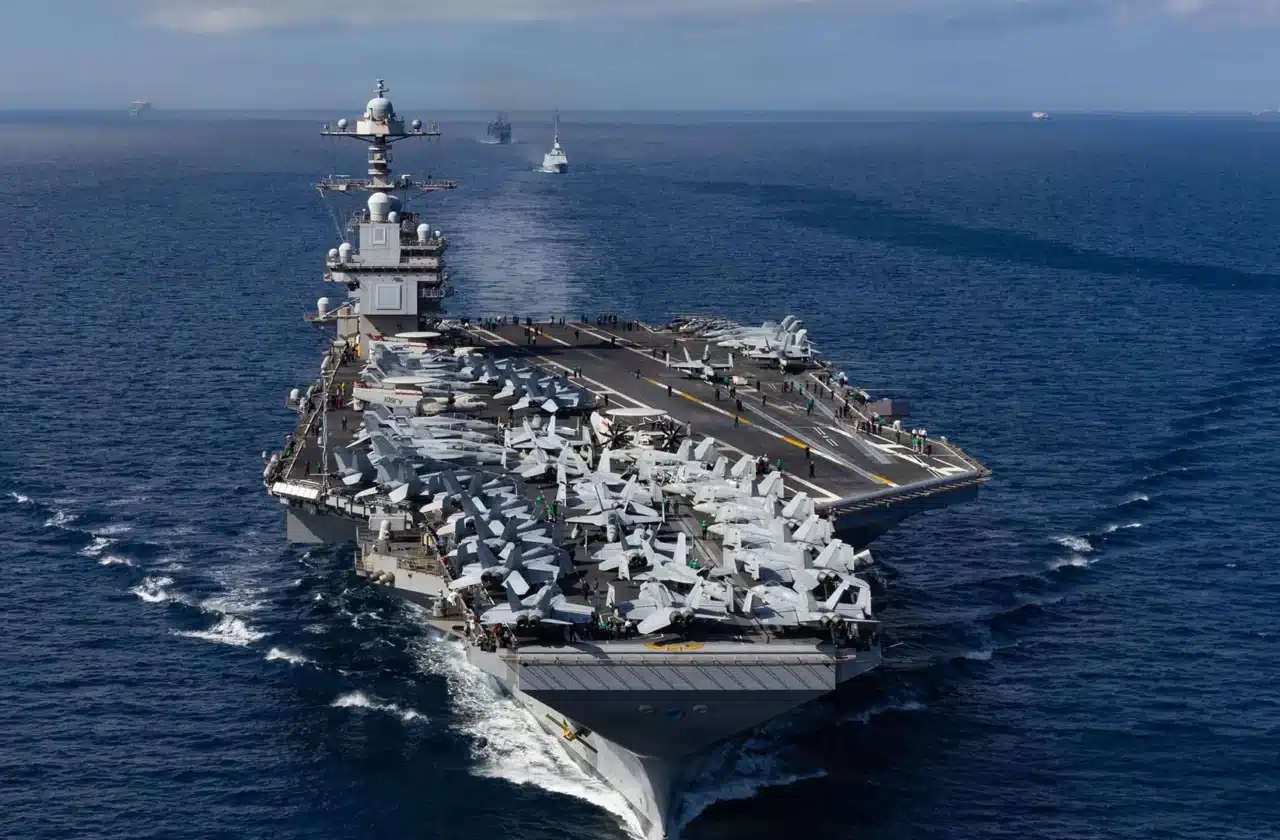
The problem is all the more complex because the US military cannot preposition defensive assets on the island without risking an immediate response from Beijing, while regional bases are already operating at near capacity. Another wargame highlighted a few months ago that dispersing forces to more distant bases, and therefore less exposed to Chinese strikes, would mechanically reduce sortie rates while increasing reliance on in-flight refueling, and demonstrates how the endurance of a prolonged effort remains limited as long as ground defenses, infrastructure resilience, and in-depth support capabilities are not strengthened beforehand.

Furthermore, Beijing's use of gray zone operations complicates the anticipation and therefore the response to a Chinese initiative, by saturating American sensors and analytical capabilities with opaque information. In this regard, in October 2025, Taipei documented eight methods of Chinese incursion around Kinmen, involving navigation among civilian vessels, falsification, and concealment of identities.
This defensive tempo necessitates an accelerated consumption of Taiwanese surveillance and response capabilities. This preemptive attrition, designed to be sustained, reduces the island's capacity to maintain a tenable posture under maritime and paramilitary pressure, while simultaneously obscuring the attribution and coherence of any potential American response.
According to the Mitchell Institute, the US Air Force does not have the necessary power to protect Taiwan until 2035.
Following a wargame session with over 60 participants, the Mitchell Institute for Aerospace Studies concluded that by 2035, the US Air Force would be unable to reliably prevent an invasion of Taiwan. This undeniable failure is not circumstantial. It stems from a lack of resources, resulting in the inability of US air forces to generate and sustain a sufficient number of sorties in a limited and multi-domain theater.
In parallel, projections state that the PLA will have around 1,000 J-20s supported by 250 to 350 J-35As in 2030, which is almost as many 5th generation fighter jets as the entire US Air Force fighter fleet, with a production capacity that could reach 300 to 400 fighters per year from 2027.
Access the full analysis
This article is reserved for MetaDefense subscribers. A subscription gives you access to all analyses, reports, and insights published on the site.
No commitment. From €1,99.

