

In March 2026, the Air and Space Force experienced, on a grand scale, a problem it had long anticipated but been unable to solve: the real cost of anti-drone defense when each interception of cheap vectors mobilizes high-end munitions.
Behind the anecdote of the sixty Shahed drones shot down near the Gulf, and the drop in MICA stocks, the entire French firing chain has been set in motion to restore a sustainable cost/effect ratio and bridge the gap between a cannon that is difficult to use on drones, and high-performance missiles that are far too expensive and take too long to produce.
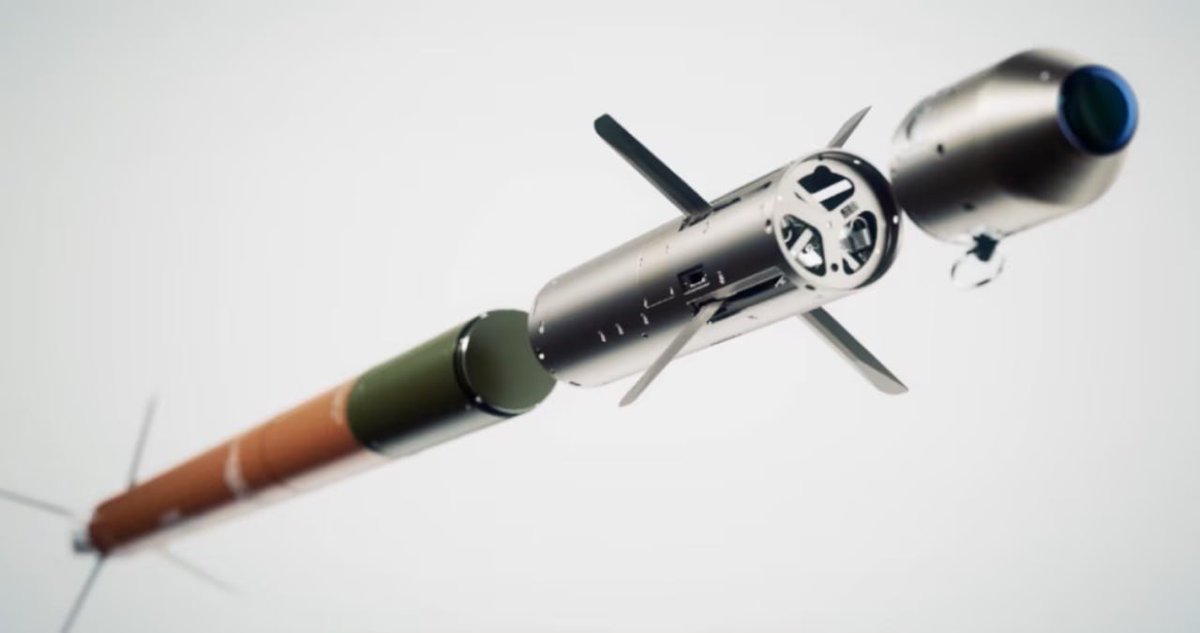
The announcement, just days apart, of the installation of Link 16 on the Tiger attack helicopters deployed to protect the UAE, followed by the development of a lightweight, laser-guided anti-drone effector expected by 2027 to balance the economic and industrial equation in the face of attack drones, marks this turning point. Beyond the immediate urgency, this Aculeus LG opens up a potential strategic rebalancing between the threat of saturation drone attacks like the Shahed and the means to defend against them.
Rafale forced to use their MICA missiles against Iranian drones
In mid-March, the Rafale Air bases in Al Dhafra reportedly shot down nearly sixty Shahed 136 kamikaze drones targeting the United Arab Emirates and Qatar, in accordance with defense agreements between Paris, Abu Dhabi, and Doha. The intensity of the strikes highlighted a significant economic imbalance that has existed since the advent of Shahed attack drones, with each interception requiring a MICA missile valued between €600,000 and €700,000, while the target itself is worth only a few tens of thousands of euros. In total, the cost of the munitions alone exceeded forty million euros, illustrating an unfavorable cost-exchange ratio compared to inexpensive but effective and destructive adversary drones.
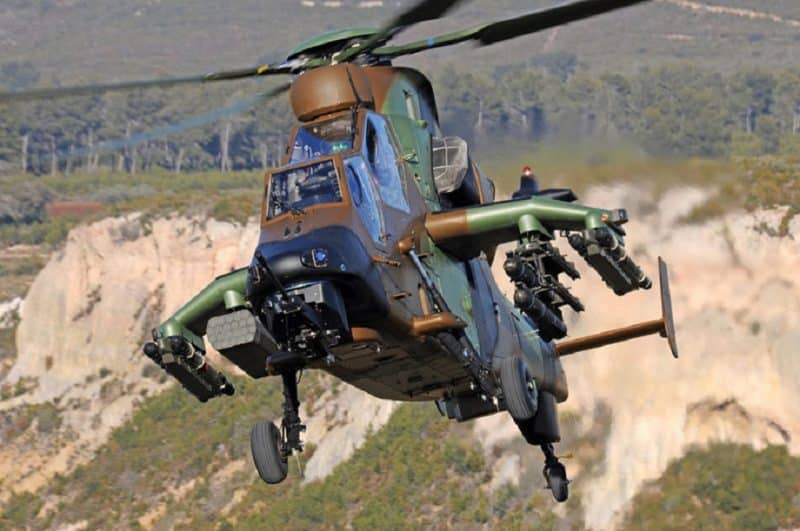
Faced with this operational pressure, the DGA, the French defense procurement agency, triggered emergency measures. The Link 16 data link was integrated onto the EC665 Tiger helicopter in less than three weeks by DGA Flight Test Center, a feat that reduced a milestone typically spanning twelve to eighteen months. Equipped with this link, the Tigers are now fully integrated into France's multi-layered defense bubble. Four Tigers fitted with this Link 16 were deployed to the United Arab Emirates at the end of March, following orders placed within forty-eight hours and the deployment of defense engineers to be as close as possible to the deployment site.
Barely two weeks later, on April 15, DGA Patrick Pailloux announced a contract awarded to Dassault Aviation to adapt the fire control system of the Rafale in order to integrate 68mm air-to-air rockets to intercept these drones. In parallel, a study has been launched to integrate a laser-guided rocket pod, with munitions supplied in particular by Thales and equipped with air-to-air capabilities, with availability announced as early as this summer.
In mid-March, the Rafale Air bases in Al Dhafra reportedly shot down nearly sixty Shahed 136 kamikaze drones targeting the United Arab Emirates and Qatar, in accordance with defense agreements between Paris, Abu Dhabi, and Doha. The intensity of the strikes highlighted a significant economic imbalance that has existed since the advent of Shahed attack drones, with each interception requiring a MICA missile valued between €600,000 and €700,000, while the target itself is worth only a few tens of thousands of euros. In total, the cost of the munitions alone exceeded forty million euros, illustrating an unfavorable cost-exchange ratio compared to inexpensive but effective and destructive adversary drones.
Faced with this operational pressure, the DGA (French Defence Procurement Agency) triggered emergency measures. The Link 16 data link was integrated onto the EC665 Tiger helicopter in less than three weeks by DGA Flight Test Center, a feat that reduced a milestone typically spanning twelve to eighteen months. Equipped with this link, the Tigers are now fully integrated into France's multi-layered defence bubble. Four Tigers equipped with this Link 16 were deployed to the United Arab Emirates at the end of March, following orders placed within forty-eight hours and the deployment of defense engineers to the immediate vicinity of the deployment.
Barely two weeks later, on April 15, DGA Patrick Pailloux announced a contract awarded to Dassault Aviation to adapt the fire control system of the Rafale in order to integrate 68mm air-to-air rockets to intercept these drones. In parallel, a study has been launched to integrate a laser-guided rocket pod, with munitions supplied in particular by Thales and equipped with air-to-air capabilities, with availability announced as early as this summer.
However, with the exception of traditional air-to-air missiles, MICA on RafaleMistral-equipped Tiger drones offered relatively limited short- and very-short-range interception capabilities, apart from the 30mm cannon, which was poorly suited to intercepting targets as small and slow as the Shahed drones. This required the aircraft to perform numerous maneuvers to achieve the necessary gun pass. Therefore, against an attack by multiple drones, the cannon was not a viable alternative.
This shift towards affordable weapons has therefore reached the doctrinal level. In the fall of 2025, General Jérôme Bellanger reiterated that he was studying the adaptation of low-cost weapons to counter threats like Shahed, deeming it inconceivable to deplete the most expensive munitions on such targets. The need for a dedicated short-range capability has, in fact, become a priority, well before the Iranian episode.
The arrival of the Aculeus LG could redefine the appeal of the drone saturation equation, which is causing so much concern.
On April 23, 2026, the DGA officially announced the development of a 68mm laser-guided missile, presented as an anti-drone solution. Named Aculeus LG, it is intended for Rafale and the Tiger helicopters to intercept drones and loitering munitions. Trials are planned for June 2026, with production considered likely from 2027 if successful. The objective is to quickly deliver an effective short- and very-short-range effector to both platforms.
Access the full analysis
This article is reserved for MetaDefense subscribers. A subscription gives you access to all analyses, reports, and insights published on the site.
No commitment. From €1,99.

