

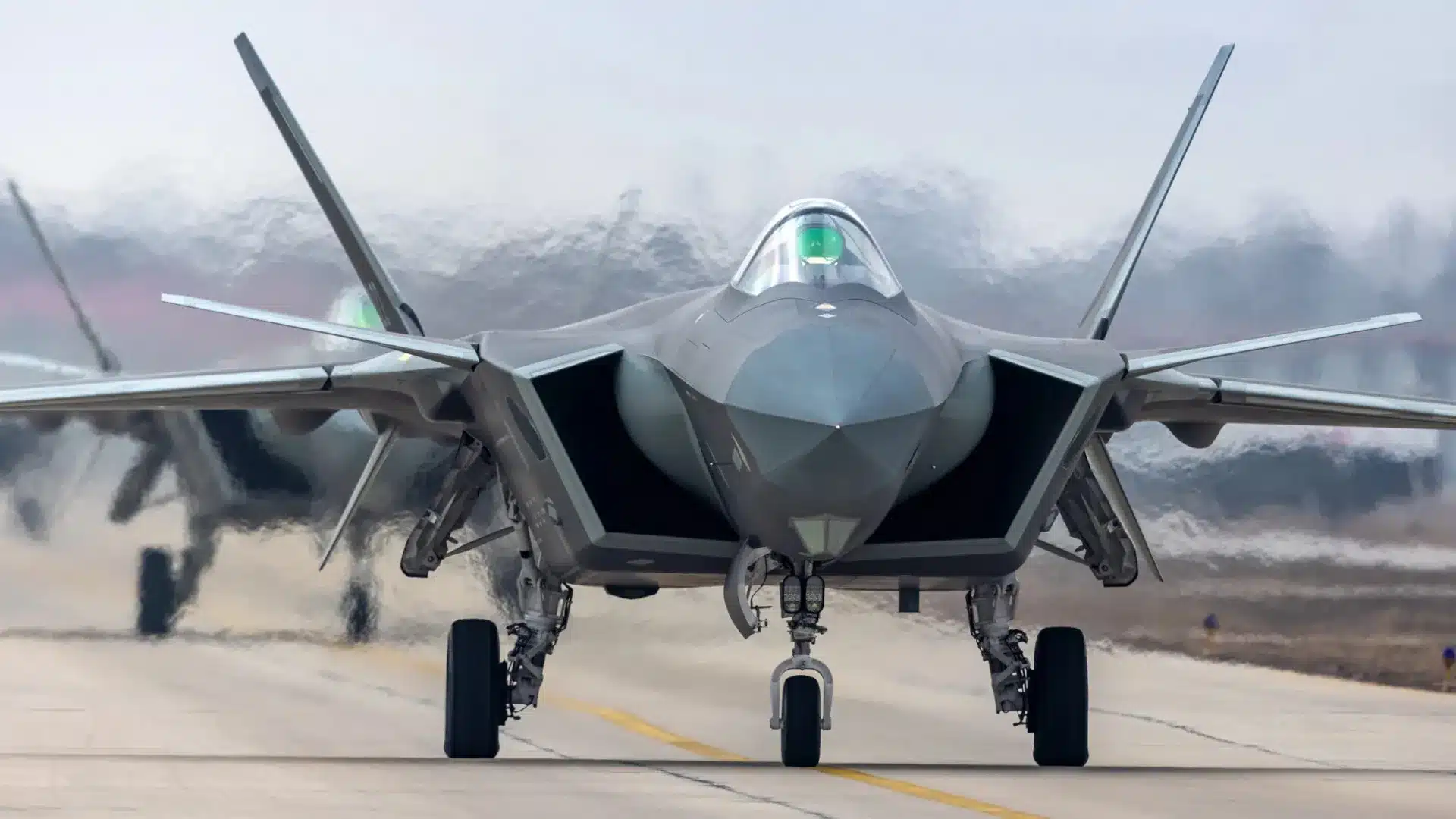
Produced at 70 to 80 units per year starting mid-2024 and boasting 320 to 350 units by mid-2025, the J-20 has established itself as a pivot of Chinese modernization. In this context, the prospect of a capacity of up to 400 fighters per year by 2027, supported by the expansion of the Chengdu factories and three other sites, shifts the question towards mass production. Such an industrial advance, surpassing the roughly 156 F-35s delivered each year, reshuffles the benchmarks of transpacific comparison and relates to the replacement timelines for the 700 third-generation fighters still in service.
The question remains whether the People's Liberation Army can, starting in 2026, convert this increased cadence into production on multiple assembly lines, as observed in the naval sector a decade ago. The choices regarding the J-16, J-35A, and J-20 upgrades, the sustainability of engines, and the alignment of suppliers form the immediate variables of this trajectory.
The J-20 reaches a confirmed industrial threshold in 2024
Starting from mid-2024, estimates have confirmed a first industrial threshold for the J-20. Janes has assessed annual production between 70 and 80 units. Public inventories have placed the total fleet between 320 and 350 units by mid-2025, reflecting several consolidated delivery waves. A recent year would have even approached one hundred and twenty aircraft delivered, according to Justin Bronk from RUSI. This volume already positions the aircraft at the heart of the modernization effort and paves the way for a more ambitious scaling from 2026 onwards.
Meanwhile, the J-16 has maintained a high pace, estimated at around one hundred units per year according to public estimates. Cumulative deliveries would have approached four hundred and fifty units by the end of 2025, establishing a robust baseline referred to as 4.5 generation. This versatile backbone complements the upper spectrum provided by the J-20, rapidly densifying units and introducing new standards for sensors and armaments, while preparing for the accelerated renewal of older fleets.
In total, the Chinese air forces aligned approximately one thousand eight hundred combat aircraft as of March 23, 2026, including nearly seven hundred of the third generation. This structure imposes short-term priorities with a goal of retiring the last third-generation aircraft by 2030. The timeline assumes a sustained delivery pace, coordinated withdrawals, and increased means for training, maintenance, and support. The gains in cadence observed in recent programs directly address these requirements.
The palette of fighters has expanded upward with the J-35A, publicly presented at the Zhuhai airshow in November 2024. This appearance introduced a new capability tier within the fifth generation, both terrestrial and potentially carrier-based. It raises allocation arbitrations between air and naval forces during the initial series and tests the sector's ability to simultaneously absorb several cutting-edge programs. Lastly, it fuels the question of a multi-line massification starting in 2026.
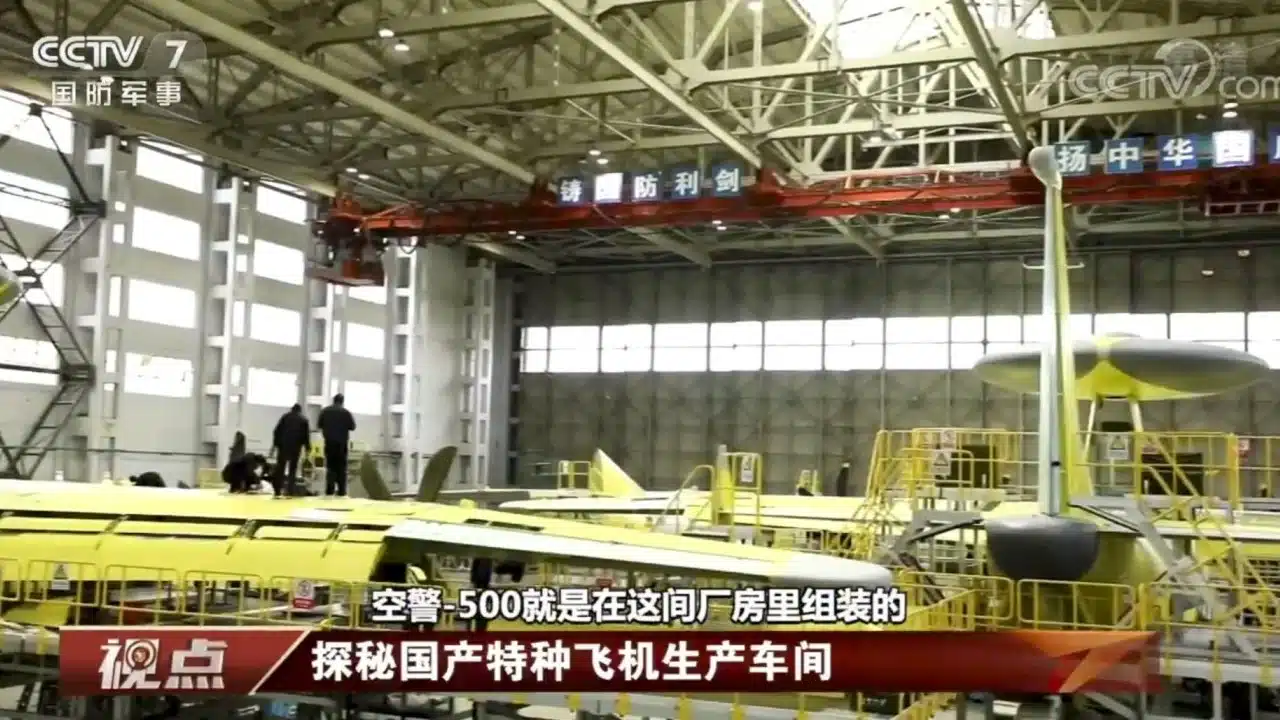
Several converging signals justify the examination of a rapid industrial transition. Projections support that an annual capacity of four hundred advanced fighters could be reached by 2027, continuing the observed efforts from 2024 on the J-20 and J-16. This scenario relates to the net annual effect of service introduction against adversary fleets and places the industrial apparatus at the heart of the 2026-2030 trajectory.
The expanded Chengdu factory supports an annual capacity of up to four hundred fighters
The prospect of a capacity of up to four hundred fighters per year by 2027 extends the now-established base. Specialized analyses converge on this potential and highlight a possible acceleration starting in 2026. "China’s inventory of fighters and attack aircraft will grow significantly over the next five years," notes J. Michael Dahm of the Mitchell Institute for Aerospace Studies. This milestone reshapes the assessment of annual entries into service and encourages checks on concrete signs of expanding industrial footprints and the allocation of lines across multiple sites.
Access the full analysis
This article is reserved for MetaDefense subscribers. A subscription gives you access to all analyses, in-depth reports, and expert briefings published on the site.
No commitment. From €1.99.

