

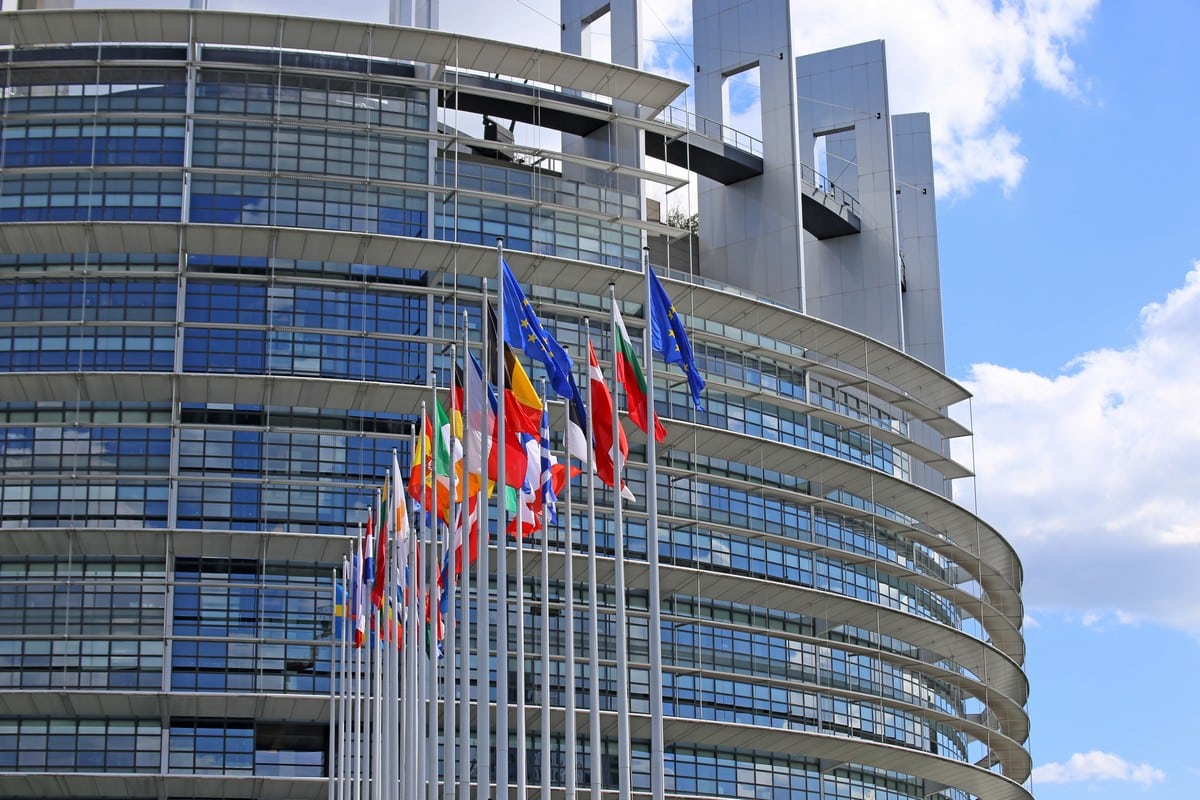
The Sparta 2.0 document, made public by the Kiel Institute for the World Economy and signed by Thomas Enders and four other figures from German industry and research, estimates that around 50 billion euros per year would be necessary to build a European defense autonomy. The authors describe a pronounced dependence on the United States and set three to five years as windows for significant progress. However, this ambition clashes with major orders placed by several European capitals in favor of non-European equipment, which divert the chains of effects and support away from the continent.
The study identifies ten critical gaps affecting command and control, autonomous systems, precision strike, and air defense. It estimates the investment needed by 2030 between 150 and 200 billion euros, and 500 billion over ten years, funded, according to it, by a reallocation equivalent to about 10 percent of European military spending, or nearly 0.25 percent of GDP. “A high degree of European independence can be achieved in a few years,” says Thomas Enders, provided this objective is treated as a genuine Manhattan Project.
The authors detail orders of magnitude and timelines. A European command and control system could be established in three to four years for 10 to more than 20 billion euros, with the Ukrainian Delta system as an operational reference. An increase in drones and loitering munitions, on the scale of several million units annually, would require at least 30 billion over three to five years. Ground precision strike is estimated at 20 to 30 billion over a similar horizon, while sixth-generation fighters would require at least 200 billion over more than a decade.
At the same time, the European air segment continues to significantly equip itself across the Atlantic. Lockheed Martin estimates that about 450 F-35s could be flying in Europe by 2030. In Italy, the Court of Auditors noted a sharp rise in the costs of the F-35 program compared to initial forecasts, with nearly 12 billion dollars committed in total and unilateral American decisions impacting the trajectory. Rome has reduced its target to 90 aircraft, without questioning its participation, highlighting the depth of capability and industrial anchoring.
On the naval side, Germany has selected an architecture integrating American radars, the AEGIS combat system, and twelve Mk41 vertical launch modules for its future F-127 air defense frigates, increasing the number of silos to 96. Berlin aims to notify the order starting mid-2026 for eight vessels, with service entry targeted for the early 2030s. According to reported assessments, the 26 billion euro program could generate gains exceeding 12 billion dollars for American manufacturers.
On land, Warsaw has taken a different trajectory by favoring South Korea, with 180 K2 tanks ordered in 2022 and then a second contract signed on August 1, 2025, for an additional 180 K2 and 81 support vehicles. Sixty-four tanks will be produced in the K2PL version, including sixty-one in Poland, as part of a structuring industrial transfer. Hyundai Rotem and ZM Bumar Łabędy are expected to formalize the final preparation agreements for production by April 27, 2026, illustrating a trade-off between delivery timelines and local capacity buildup.
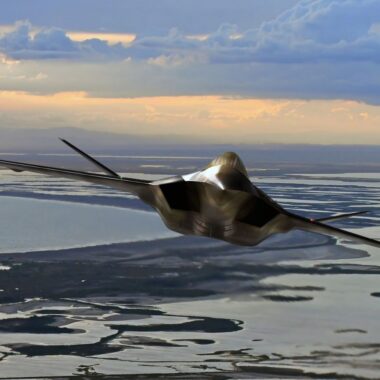
In Spain, the Air and Space Force has opened discussions with Turkish Aerospace Industries regarding the fifth-generation Kaan fighter, confirmed by the CEO of TAI during the SAHA fair in Istanbul. Madrid had allocated 6.25 billion euros in 2023 to replace its Harrier II and F/A-18 fleets. According to El País in August 2025, the government’s requirement to invest 85 percent of the funds in Europe would make the acquisition of the F-35 incompatible, while an order for thirty Hürjet training aircraft was announced in cooperation with Airbus and TAI.
Sparta 2.0 places the building of a sovereign command and control system and a defense cloud at the heart of reducing dependence. The authors note the absence of a European equivalent to Palantir and recommend building a space and connectivity network of satellite constellation type, identified as priority number one. They estimate that initial effectiveness in air defense can be achieved in three to five years, with broader completion in five to ten years for a total close to 50 billion euros, with next-generation interceptors at the end of the effort.
With the K2PL, Poland will indeed have an intermediate generation tank!"]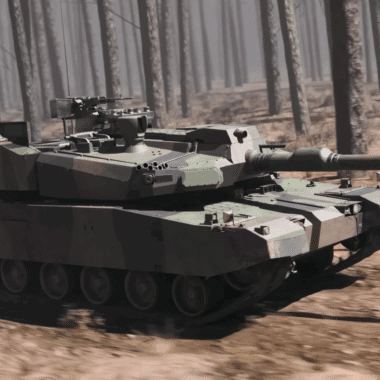
The promoters of the document deem the objective credible provided there is sustained political priority, coalitions of driving countries, and acquisition methods refocused on competitive prototypes and results-oriented contracts. They emphasize a cost uncertainty of about 20 to 30 percent, calling for the provision of margins and adjustment mechanisms during execution. “Ukraine shows that a large landscape of suppliers combining established and new actors is more resilient, faster, and more cost-effective,” they write.
However, the sequence of purchasing decisions reveals a persistent orientation towards American, Korean, or Turkish systems, whether for industrial, cost, or alliance reasons. This trend directly impacts the consolidation of a truly European technological and operational base, even as Sparta 2.0 proposes tighter windows of three to five years for substantial progress. As long as these trade-offs persist, the trajectories outlined by the study will remain tested by the reality of ongoing programs and contracts.

