

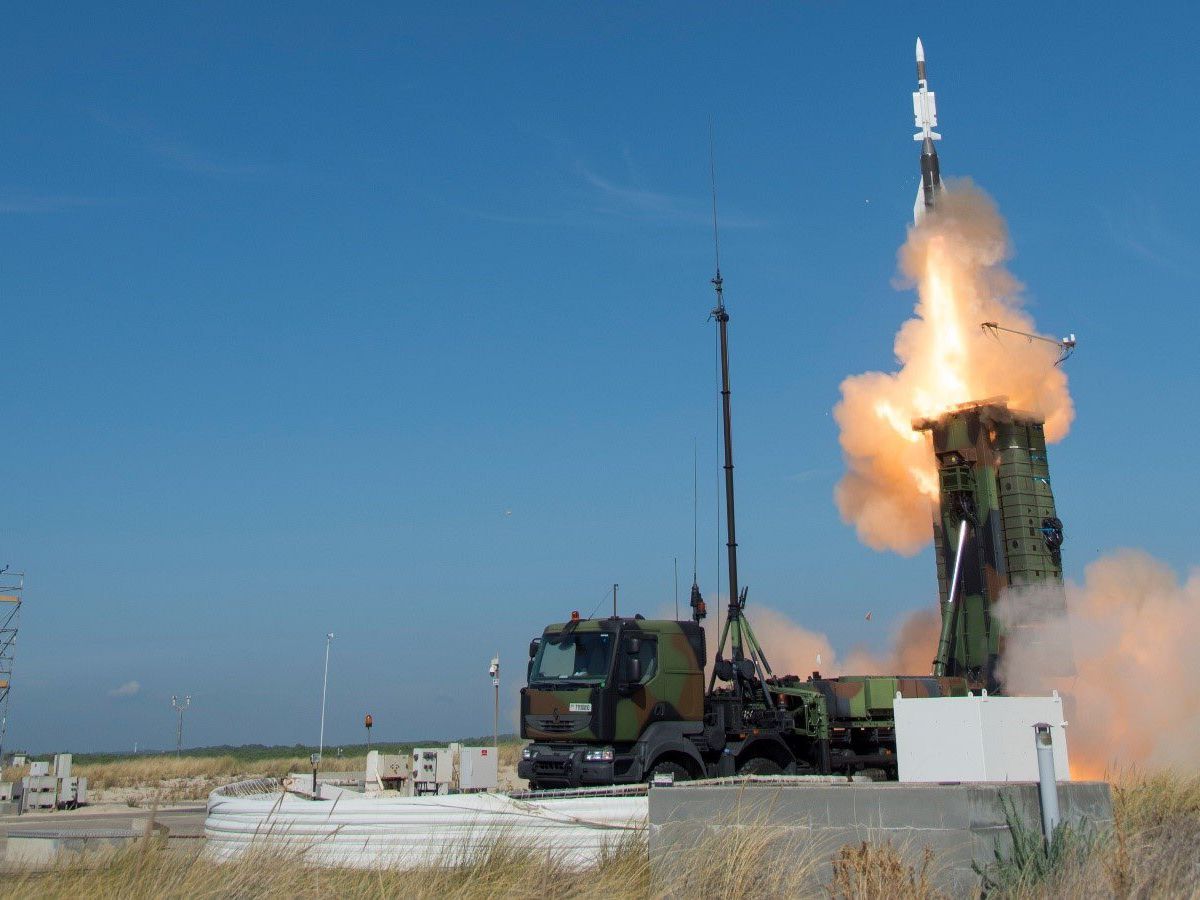
At a time when air and missile defense is once again becoming a central strategic focus in Europe, the trajectory of the SAMP/T NG falls within a unique window of opportunity. Faced with a Patriot system that built its dominance on sheer numbers and early deployment, the armed forces' attention has shifted towards industrial sustainability, access to munitions, and the synchronization of customer schedules.
The Danish decision, the refocusing of capabilities around the Aster 30 Block 1NT, and the open architecture of the engagement module are reshaping a landscape where NATO interoperability and common logistics are becoming more crucial than ever. However, the industrial pace must be maintained, otherwise the European dynamic, which finds its foundation here, risks being stifled.
With the Aster 30B1NT, the SAMP/T NG becomes one of the most effective anti-ballistic systems
Designed through Franco-Italian cooperation and entering service in 2008, the SAMP/T provided the effective technical and doctrinal foundation for the French and Italian armed forces and industries that developed it. After an initial mishap in Ukraine, the "Mamba" quickly established itself as a credible alternative to the ubiquitous American Patriot, effectively intercepting fighter jets, cruise missiles, and ballistic missiles. Even before this incident, Paris and Rome had launched its successor, the SAMP/T NG, in 2021.
The core capability of the NG generation lies in MBDA's Aster 30 Block 1 New Technology, which has an interception range of up to 150 km. Equipped with a Ka-band seeker and a new-generation computer, the interceptor targets medium-range ballistic threats and hypersonic vehicles, while extending its interception potential against aerodynamic targets, fighter jets and cruise missiles.
The NG architecture boasts detection ranges exceeding 350 km, interception up to 150 km, and enhanced simultaneous tracking to handle complex salvos. This three-pronged approach—range, discrimination, and track density—meets the operational requirements now shared by European forces and largely confirmed by lessons learned from Ukraine and the Middle East.
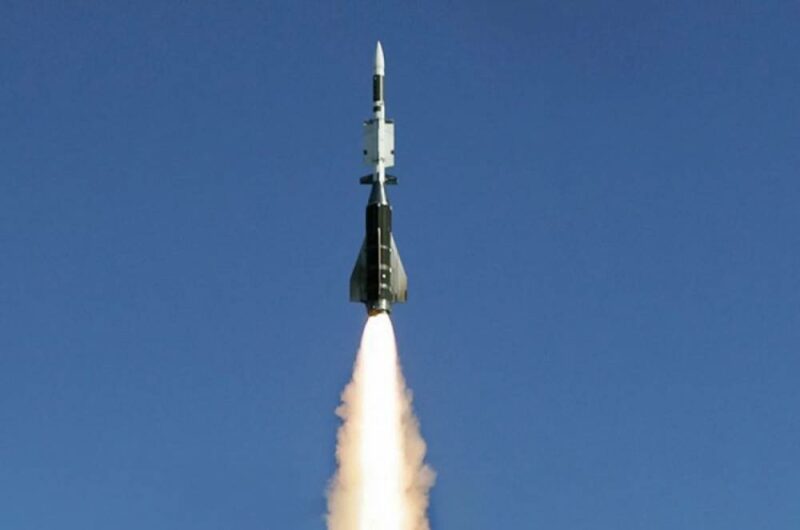
The effectiveness of the SAMP/T NG is not merely theoretical. It has been validated by several real-world tests, first in October 2024, when a complex multi-target scenario validated the detection-engagement chain. In July 2025, a long-range qualification firing confirmed the anti-ballistic missile positioning of the Block 1NT.
These trials confirmed the necessary and sufficient technical maturity for production, while also aligning the schedules of French and Italian operators, eager to implement these new capabilities. In parallel, MBDA announced the doubling of Aster missile production rates by 2026, while a decision, finalized on August 5, 2024, excluded the Aster 15/15 EC from the SAMP/T NG, as was already the case for the Aster 15 on the Mamba, again to standardize the payload to forty-eight containers of Aster 30 (Block 1/Block 1NT) per system and streamline logistics and inventory.
For a long time, the American Patriot dominated the Western market for long-range surface-to-air defense. Besides the exposure gained from its use during the Gulf War in 1990-1991, the American system benefited from two key advantages: its deployment by the US Army, and more than 120 operational batteries, as well as 10,000 missiles produced.
Such a superior volume has been a significant advantage in international competitions, and until now, apart from its French and Italian designers, the Mamba had only achieved success in Singapore. Currently, constraints on access to ammunition, as well as uncertainties surrounding the American stance in the coming years, are reshaping the competitive landscape in Europe.
Where delivery schedule and stock availability become dominant criteria, a credible and sustainable offer places the SAMP/T NG as a direct alternative, supported by a European industrial base that is becoming more organized and denser as orders become more structured.
With the Danish order, the SAMP/T NG becomes a credible player in ABM in Europe
On April 21, 2026, Denmark officially ordered the SAMP/T NG to protect its airspace, with deliveries starting in 2028. Under OCCAR supervision, the contract is being managed by Eurosam as prime contractor. Copenhagen becomes the third customer for the NG generation after France and Italy, but more importantly, the first export customer—a symbolic and industrial turning point that opens the European deployment cycle beyond the circle of founding nations.
Access the full analysis
This article is reserved for MetaDefense subscribers. A subscription gives you access to all analyses, reports, and insights published on the site.
No commitment. From €1,99.

