

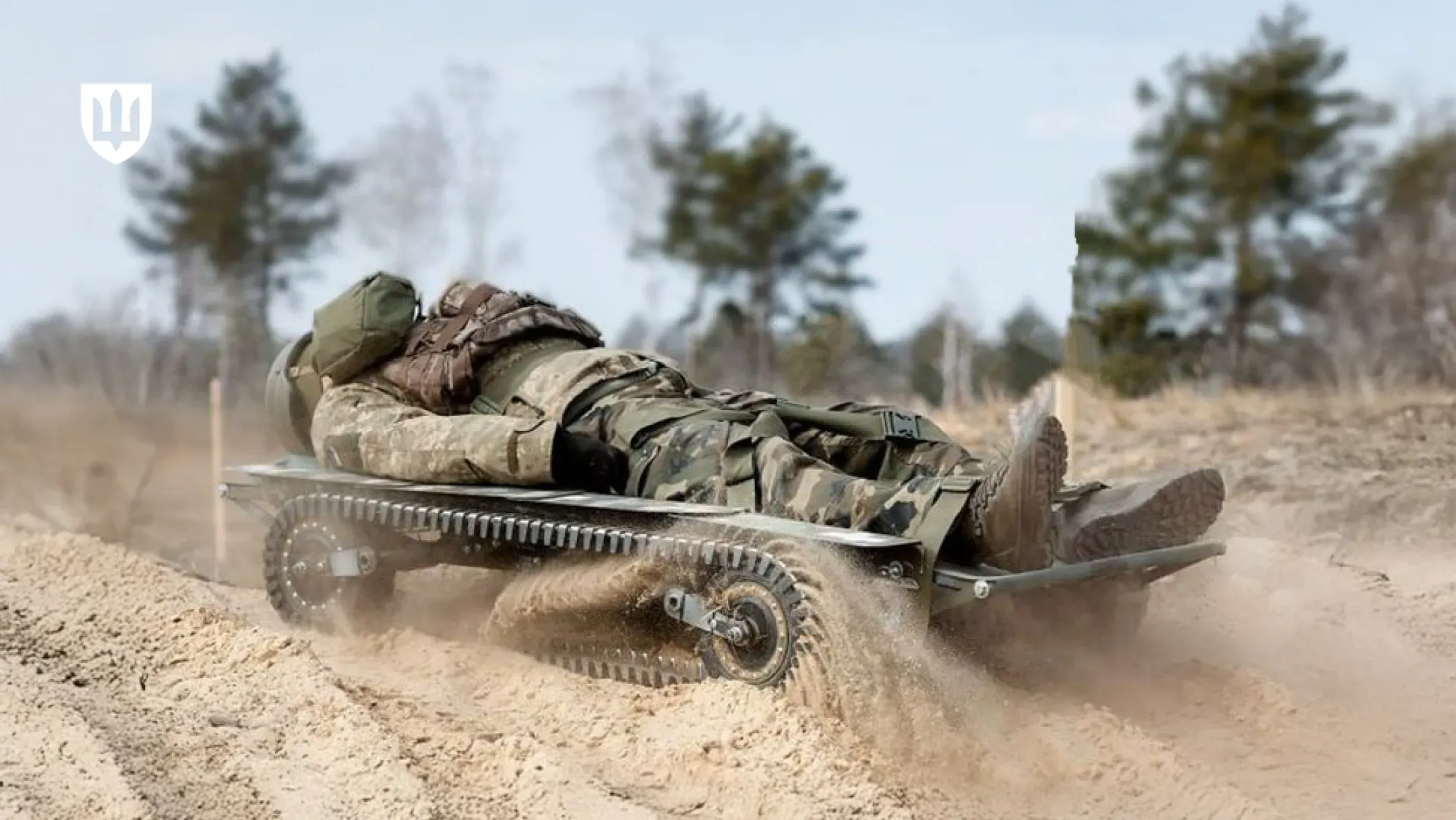
Kyiv has set a target of 25,000 unmanned ground vehicles (UGVs) by the first half of 2026 to transfer most exposed tasks to robotic platforms as pressure on troop numbers remains high. However, this ramp-up faces a recurring technical constraint on the Ukrainian front: maintaining a reliable link in a jamming-saturated environment. In the immediate term, the arrival of several hundred additional UGVs and the expansion of missions aim to reduce direct exposure of soldiers, contingent upon resilient communications and rapid integration of new systems.
The Ministry of Defense of Ukraine has launched a massive procurement plan to contract 25,000 robotic ground systems by mid-2026. Minister Mikhailo Fedorov announced the ambition to shift 100 percent of frontline logistics to unmanned platforms. The Ukrainian Defense Procurement Agency has already signed 19 contracts with local manufacturers totaling 11 billion hryvnias to stabilize industrial supply chains in line with operational needs.
The use of these systems has increased on the battlefield. Ukrainian forces conducted over 9,000 logistics and evacuation missions in March 2026, and more than 21,500 operations were recorded in the first quarter. The DELTA combat management system reports a total close to 24,500 missions tracked during the same period. Ukrainian assessments indicate fortified Russian positions taken using aerial and ground platforms, without direct infantry engagement, in limited cases.
To ease the strain on human resources, President Volodymyr Zelensky has extended the state of war and general mobilization while announcing an intensification of contract recruitment. He mentioned the possibility of gradual demobilization starting this year based on temporal criteria, contingent on sufficient personnel. Salaries are being raised, with a plan of 30,000 hryvnias in rear units and a range of 250,000 to 400,000 hryvnias on the front line, to attract and retain personnel.
Meanwhile, Ukraine is preparing the Drone Line with a recruitment of 15,000 specialists, aimed at creating a destruction zone ahead of positions. The Ministry indicated on X its aim to neutralize enemy activity mainly through unmanned systems in a death zone stretching 10 to 15 kilometers in front of the front line. This direction implies training operators and deploying sustained volumes of platforms in coordination with engaged units.
In the ground segment, ARX Robotics has delivered several hundred UGVs of the GEREON series to Ukrainian forces, an addition that is said to have quintupled the existing fleet and positions the manufacturer as the main Western supplier of UGVs in Ukraine. ARX is ramping up production at several sites, developing local collaborations for industrial setup in Ukraine, and deploying on-the-ground training and maintenance capabilities. In cooperation with MBDA, the Enforcer Gereon station combines the UGV Gereon RCS with the guided missile Enforcer, to strike targets up to approximately 2,000 meters.
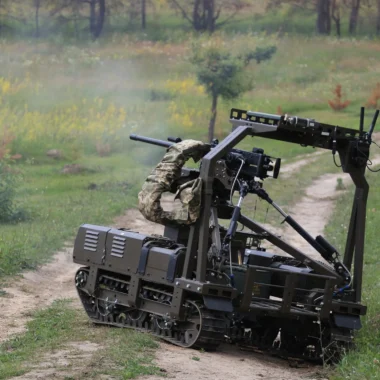
The ongoing integration of materials illustrates a broader offering. The Bizon L platform, coded according to NATO standards, can carry 300 kilograms over 50 kilometers for logistics and evacuation missions. The D 21 11 was developed within the Brave1 defense cluster. The tracked Spider platform, presented by Ukrainian developers and undergoing certification, can be equipped with Browning M2 or PKT machine guns as well as automatic grenade launchers AGS 17 or Mk19, with remote control via LTE, radio, Starlink, or fiber optics.
Some units are already using light combat robots. The 65th Mechanized Brigade has the Gnom, publicly presented in 2024 and put into service after trials in spring 2025. Equipped with two RPG 7s and a machine gun, sometimes replaced by a third grenade launcher, it can carry up to 40 kilograms. In practice, the range of remote operation is severely contracted in the presence of electronic warfare, necessitating reduced control distances and tight planning of maneuvers.
A major constraint remains communication. Serghei Flash Beskrestnov, adviser to the Ukrainian Defense Minister, summarizes the issue succinctly: a robot without a signal is just a piece of metal. UGVs operate in an environment unfavorable to transmissions, with terrain, vegetation, and urban obstacles interrupting the command link. Any loss of signal results in a stop or blockage, exposing the platform to strikes or capture. Technical teams are working on hybrid channels and autonomous modes to execute simple tasks in the event of a cut.
Kyiv is also advancing on autonomy and data management. The Ministry has integrated the DELTA battlefield platform, and the Vezha software automatically processes approximately 50,000 video and photo feeds transmitted by drones, locating and classifying thousands of targets each month. According to military intelligence chief Kirilo Budanov, new platforms with autonomy are expected to create a major vulnerability for the Russian army. Authorities mention a final development phase for autonomous controls based on artificial intelligence.
Unit-level adoption is progressing. The number of military units actively using UGVs increased from 67 in November 2025 to 167 in March. Ground robots are responsible for ammunition deliveries, logistics missions, and casualty evacuations, intending to substitute systems for personnel in the most exposed roles. The immediate arrival of GEREON is expected to strengthen these logistics and medical aspects, with anticipated gains dependent on the robustness of links and available maintenance close to the lines.
The procurement program and the 19 signed contracts establish an industrial framework for the next two years, complementing the growth of the Ukrainian defense technology sector, which includes more than 280 companies and over 550 documented solutions. Achieving the target of 25,000 UGVs will, however, depend on the rapid integration of local suppliers, increased production rates, and especially hardened communications permitting sustained operational use at the contact line, a sine qua non condition for the desired robotization by Ukrainian forces.

