

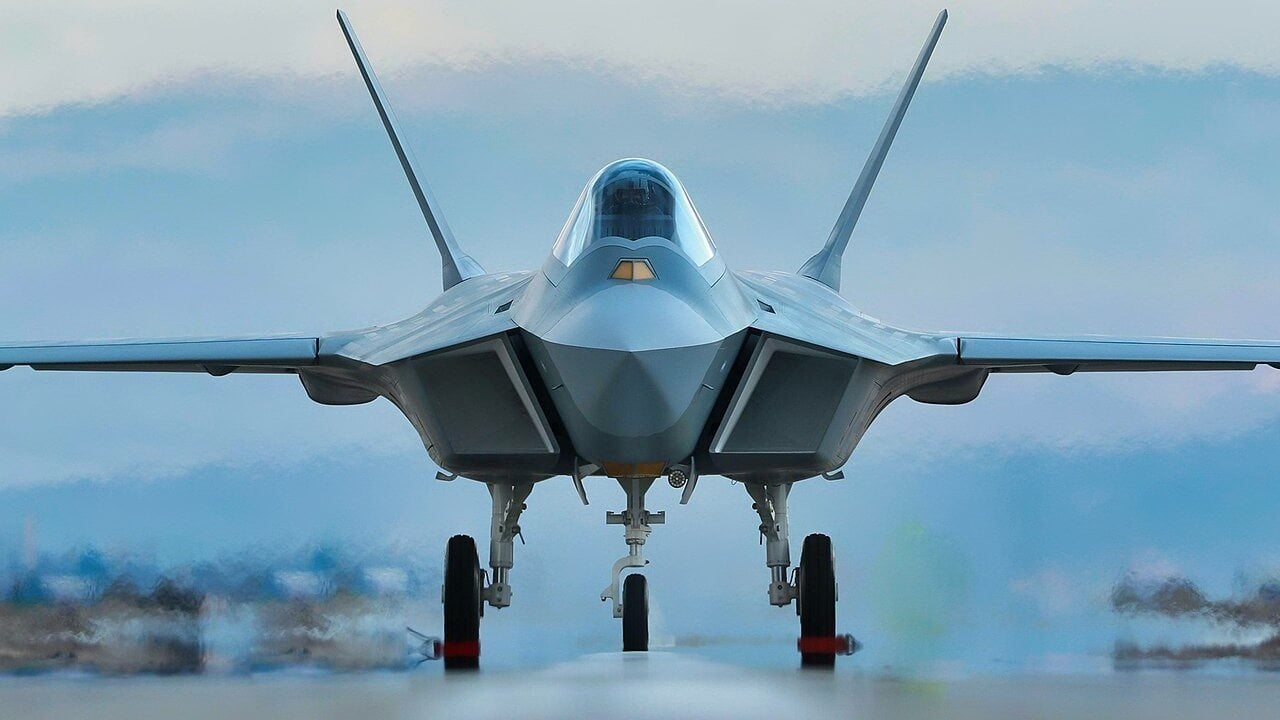
At the SAHA 2026 exhibition in Istanbul, Mehmet Demiroğlu, CEO of Turkish Aerospace Industries, told InfoDefensa that he received an official request from the Spanish Air and Space Forces for its fifth-generation fighter Kaan. “We have received a request, we are in the early stages of discussion,” he stated, referring to an intergovernmental matter. This initiative comes as Madrid hesitates to place an order for American F-35s and seeks to secure the renewal of part of its combat fleet. Turning to the Turkish Kaan program is becoming a working hypothesis, with no public timeline or volumes mentioned.
In recent years, the Ejército del Aire y del Espacio has advocated acquiring F-35A jets to replace part of its F/A-18 Hornets and F-35B to replace the EAV-8B Harrier IIs of the Flota de Aeronaves, alongside the Halcón 1 and Halcón 2 programs that aim for an additional forty-five Eurofighters. General Francisco Braco, then chief of staff of the Air and Space Force, justified maintaining two fleets. “We have always had two fleets of aircraft; if one develops a structural failure, the first measure is to ground it,” he explained, dismissing the option of a solely Eurofighter fleet.
For the Spanish Navy, the issue is to maintain an aerial naval capability after the Harriers. Last July, Admiral Teodoro Esteban López Calderón, chief of the defense staff, publicly supported the purchase of F-35s, referred to as the “aircraft that makes the difference.” He noted that he saw no immediate alternative for acquiring advanced stealth technology, except to extend the use of fourth-generation aircraft while waiting for the Future Combat Air System. The Franco-German-Spanish FCAS program has since slipped towards the 2040s, pushing back a credible European alternative to meet this need in the medium term.
The budgetary framework had nonetheless been established. In 2023, the Spanish government allocated €6.25 billion to replace Harriers and Hornets. In April 2025, it approved a €10.471 billion plan and confirmed the goal of allocating 2 percent of GDP to defense. According to El País, however, official sources deemed the order of an American model incompatible with these orientations, as the government decided to invest 85 percent of the budget in Europe. This stance, supported by the majority led by Pedro Sánchez, explains the hesitation regarding an F-35A or F-35B purchase.
In this context, the industrial rapprochement with Ankara has gained momentum. Madrid has ordered thirty Hürjet aircraft to replace the F-5 Tigers, in a cooperation model between Airbus and Turkish Aerospace Industries. When asked in Istanbul, Mehmet Demiroğlu stated, “I cannot speak openly as it is an intergovernmental matter,” while confirming that “discussions are underway” and that after the Hürjet, “the next project will be the Kaan.” According to InfoDefensa, a setup similar to that of the Hürjet could facilitate technology transfers to Spain, a possibility absent from the framework proposed for the F-35.
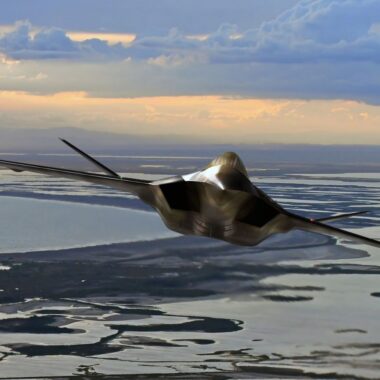
The Kaan had its maiden flight on February 21, 2024, followed by a second one in May, marking the start of the flight testing phase of the program also referred to as TF-X. Designed to replace Turkey’s F-16s starting in the 2030s, the aircraft aims for low observability with internal bays and an avionics architecture developed in Turkey, including an active electronically scanned array radar, electro-optical sensors, and electronic warfare systems. Its ramp-up remains gradual, with TAI continuing the assembly of new prototypes and full-scale static tests to correlate design and flight safety.
Engines are a point of attention for any potential partner. The first prototypes use two General Electric F110 turbofans, of American origin, subject to export controls. In September 2025, the Turkish foreign minister indicated that the U.S. Congress was blocking export licenses for these engines. Turkey is concurrently developing the TF35000 to aim for national propulsion, with maturity expected over several years. Any Spanish option would thus imply a transitional period to clarify and specific industrial requirements if Madrid wishes to reduce initial reliance on American components.
Opting for the Kaan would not cover all Spanish needs. The aircraft does not exist in a short takeoff and vertical landing version. However, the navy must replace its EAV-8B Harrier IIs, and only the F-35B variant offers this capability at this stage. In the absence of a specific decision for its embarked fleet, the Flota de Aeronaves would face a capacity gap when the Harriers reach the end of their operational lifecycle, regardless of the timeline chosen to modernize the land-based combat aviation with the Eurofighter and a possible Turkish fifth-generation solution.
At this stage, neither party specifies a timeline or volumes for a potential agreement, with exchanges still described as preliminary by TAI. The trajectory of the Kaan program must still pass several milestones, with an intensification of flight testing expected in 2026 due to new prototypes being assembled in Ankara. For Madrid, the decision will coincide with the deliveries of Halcón Eurofighters and already announced budgetary choices. The government has expressed the desire for a predominantly European investment, which maintains interest in formulas including industrial cooperation in Spain.

