

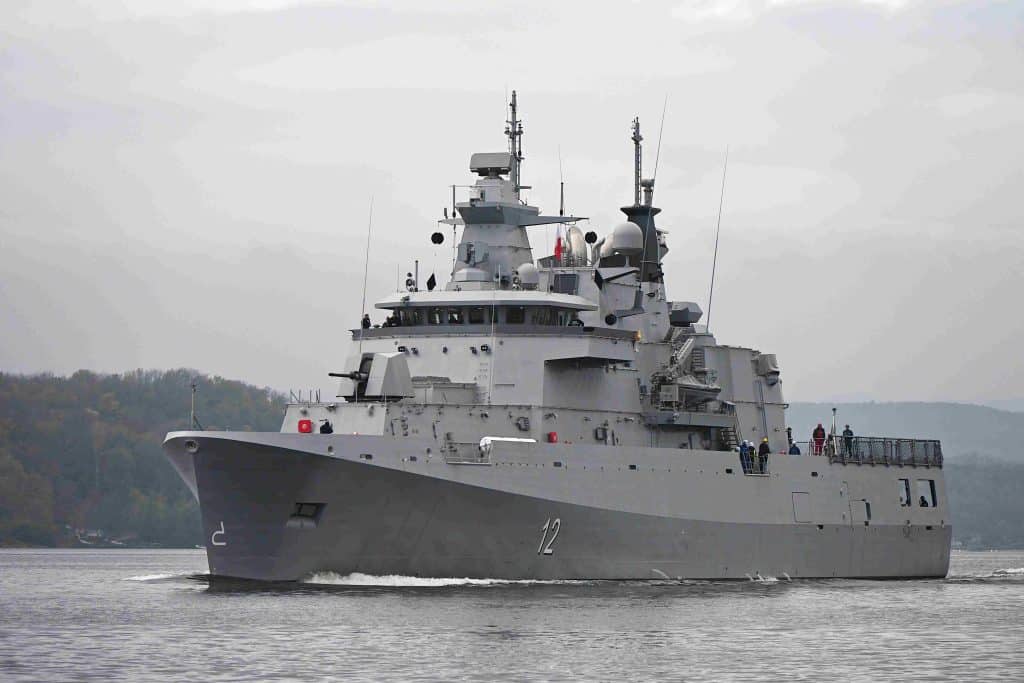
In the face of ongoing tensions in the Black Sea and the Russian naval presence, Romania announces the acquisition of two light corvettes, which will be constructed locally in Mangalia in partnership with the German group Rheinmetall. Presented by Bucharest as an immediate lever to reinforce the country's maritime posture, this decision emphasizes domestic production and the integration of recent technologies aimed at improving coastal surveillance and defense. Romanian authorities and Rheinmetall have confirmed the principle of this industrial cooperation with manufacturing taking place in Romania.
The construction in Mangalia fits into a broader strategy to strengthen the Romanian defense industry and reduce reliance on external suppliers. The ships are to receive state-of-the-art equipment to enhance their patrol, identification, and response capabilities at sea. This trajectory aligns with interoperability efforts conducted within the North Atlantic Treaty Organization (NATO), which Romania participates in, even though operational integration will require specific stages of testing, crew training, and logistical adjustments before admission to active service.
The partnership with Rheinmetall is presented both as an acquisition and as a transfer of production to the national territory, with an industrial anchoring planned in Mangalia. For the authorities, local manufacturing is expected to establish sustainable skills in military shipbuilding, secure supply chains, and increase responsiveness in maintenance and modernization. Romanian officials mention a possible ripple effect on future markets, as the industrial capacity gained would facilitate other programs carried out in Romania when additional equipment decisions are made.
This move comes as Bucharest accelerates the modernization of its armed forces. The Ministry of Defense recently presented its plan for land forces and pursues a budgetary trajectory of approximately 2 percent of gross domestic product, amounting to nearly €7.8 billion annually according to commonly cited figures. This envelope supports a set of programs initiated or in preparation, including the order of corvettes, aimed at enhancing operational credibility and capacity for contribution to allied missions.
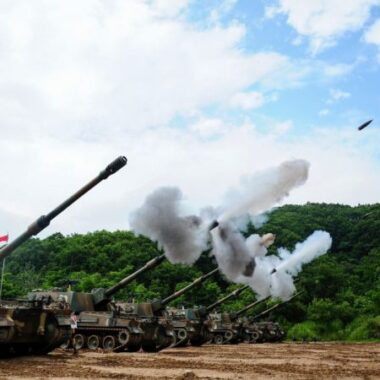
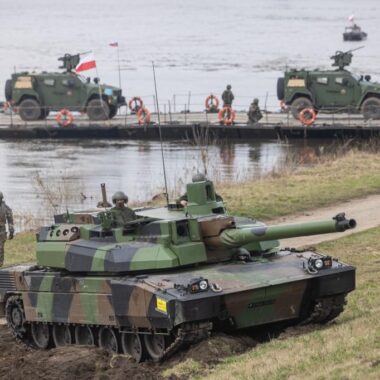
In recent weeks, Romania announced the acquisition of 54 used M1 Abrams heavy tanks from the United States, while an envelope of about €10 billion has been opened for major equipment. This includes 298 infantry fighting vehicles, 41 short-range air defense systems, around a hundred 155 mm self-propelled artillery pieces, and 485 air-to-air missiles AIM 120 and AIM 9X for F-16s. The first deliveries of mechanized infantry are expected to start this year to gradually replace the MLI 84 still in service. These vehicles will operate alongside 227 Piranha V currently being delivered.
Meanwhile, fifteen programs under the European SAFE mechanism are being submitted to the Defense Committee of the Chamber of Deputies for approval, with a final vote expected soon in the specialized Senate committee. They are to be signed individually by May 31. Their cumulative value approaches €8.3 billion, of which nearly €5.66 billion are contracts with German companies. The Rheinmetall group alone represents a contractual volume of about €4,950.4 million. Radu Miruță indicated that the average localization in Romania is around 50 to 60 percent.
The Dutch shipbuilder Damen is also adjusting its footprint in Romania, establishing the Galați yard as the main hub for its future military vessels. The company has announced an investment program of around €135 million extending until 2040 to modernize the site, with a strengthened focus on industrial security. An almost completed facility will enable the simultaneous construction of two frigates of 150 meters and 7,300 tons. Gheorghe Savu from Damen Naval România stated that military production will predominate at this site in the next 10 to 15 years.
Strengthening the industrial base also involves electronics and software, with the announced opening in autumn 2025 of the IMROD facility in Romania, driven by the IMCO group. The company will shift from assembly to local research and development and the creation of intellectual property, with an expansion of capabilities planned in Ilfov county. According to Ariel Kandel, these intelligent control and display systems rely on a modular architecture compatible with NATO standards, to accelerate the integration of new equipment for the Romanian forces.
The arrival of the corvettes will need to be accompanied by work to integrate NATO standards, with joint exercises, harmonized communication configurations, and aligned logistical procedures. Bucharest presents these ships as intended to enhance the patrol and protection of its maritime approaches in the Black Sea. The exact effect on regional balance remains to be documented in light of the deployed capacities and the commissioning schedule, but the declared aim is to strengthen sea permanence and the ability to react as closely as possible to Romanian areas of interest.
Finally, authorities emphasize the expected economic impact of industrial localization. On the SAFE projects deemed most relevant for production in Romania, estimates indicate €3.5 to €4 billion generated directly in the national industry, with an average localization rate of 50 to 60 percent. The construction of corvettes in Mangalia fits into this dynamic, with an expected increase in skills within naval chains, better supply management, and a gradual reduction in reliance on foreign suppliers mentioned by Bucharest.

