

In November 2025, the Pentagon report submitted to Congress set a target of 1,400 manned tactical aircraft for the US Air Force by 2030, while the estimated need was for 1,558 aircraft. At the same time, China was planning a fleet of approximately 1,000 J-20s supported by 250 to 350 J-35As by that time, with an annual production capacity that could reach 300 to 400 fighters by 2027. In this context, the Mitchell Institute for Aerospace Studies published a study in April 2026 concluding that the US Air Force would not be able to reliably prevent an invasion of Taiwan by 2035.
The massive influx of J-20s into the PLA is transforming the balance of power around Taiwan
In November 2025, the Pentagon report established a target of 1,400 piloted tactical aircraft for the US Air Force by 2030, compared to an estimated need of 1,558 aircraft. This gap appears all the more significant given that the next-generation platforms are not expected until the mid-2030s. The F-47, awarded to Boeing in March 2025, is scheduled to make its maiden flight in 2028. Between these two milestones, several years will pass without any significant addition of new capabilities, even though the size constraint has been identified for the end of the decade.
China's trajectory, for its part, unfolds on a shorter timescale. The J-20 fleet is projected to reach approximately 1,000 aircraft by 2030, supported by 250 to 350 J-35As. Beijing could produce 300 to 400 fighters per year as early as 2027, with an already modernized industrial base. The Chengdu plant alone would be capable of assembling more than 120 J-20s per year. This production rate therefore relies on concrete production capabilities, capable of supporting a rapid increase in volume in the second half of the decade.

On the American side, modernization relies primarily on the B-21 Raider and the F-47. The F-47's announced availability around 2035 prolongs the waiting period, while the B-21 program only provides for a minimum of 145 aircraft. The $4,5 billion in funding is directed toward development and the first units, which implies additional funding to accelerate production. Under these conditions, the expected aircraft mass cannot quickly meet the volume constraints identified in the short term.
The Chinese operational environment complements this evolving format. The Joint Island Landing Campaign (JILC) begins with cyberattacks and electronic warfare actions combined with long-range precision strikes, before the establishment of a blockade. This is followed by amphibious and air assaults against Taiwan's ports, landing zones, coastal sites, and airfields. This sequence aims to rapidly reduce the adversary's ability to retaliate, while simultaneously imposing a tempo designed to prevent the escalation of an external response.
The writings cited in April 2026 by the Mitchell Institute emphasize the speed of execution of this sequence. The objective is to deploy sufficient forces to create a fait accompli before any external intervention. This logic structures the initial phases of the operation and reduces the window of opportunity for any external force, which must intervene in an already degraded environment and under time constraints.
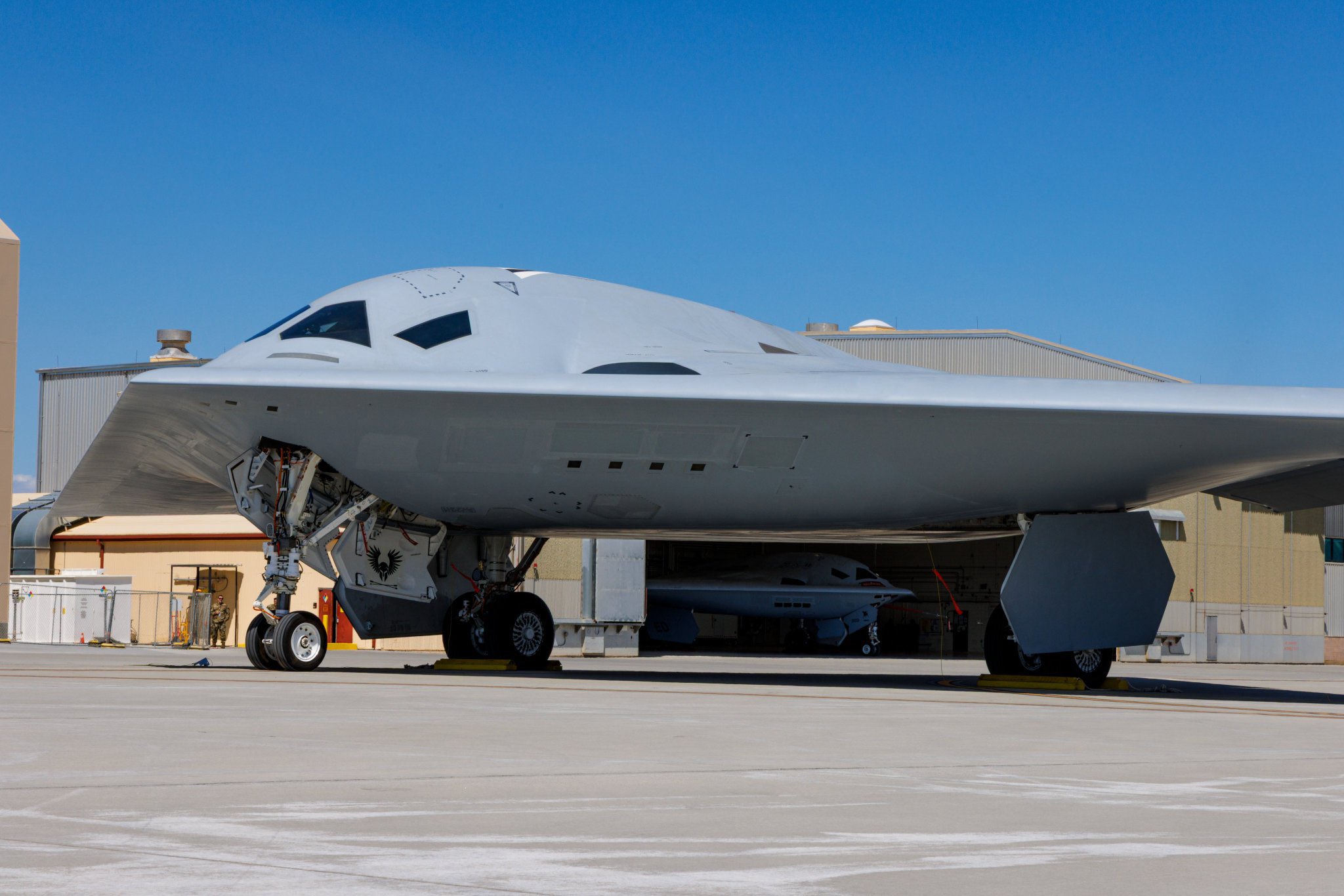
The US Air Force's B-21 Raider will single-handedly bear the brunt of the pressure on China's deep defenses for the next decade.
In this context, the Mitchell Institute published the report "Rebuilding American Airpower" in April 2026. The study is based on a wargame conducted in June 2025, which highlights the inability, with the planned resources, to sustainably prevent an invasion of Taiwan and to conduct decisive strategic strikes against China over the long term. The difficulty therefore lies both in the defense of the theater of operations and in the ability to strike deep into enemy territory.
This article is now reserved for subscribers.
Articles in this section Defense News are fully accessible during 72 hours after their publication. Beyond that, they join the feed reserved for MetaDefense subscribers.
Subscription can be cancelled at any time, starting from €1,99.

