


Indonesia has ordered twelve Kızılelma combat drones from Turkish manufacturer Baykar, with an option for four additional units, while preparing to receive the decommissioned Italian aircraft carrier Giuseppe Garibaldi, the transfer of which was approved on April 28 by the Rome parliament. The contract, signed at the SAHA 2026 Expo in Istanbul between Baykar and Indonesian PT Republik Aero Dirgantara, makes Jakarta the first foreign customer of the Kızılelma. It includes provisions for localized production and support in Indonesia. The drones are set to form the air wing of the Garibaldi, which the Indonesian navy aims to re-equip for operations focused on unmanned systems.
According to SavunmaSanayiST, the first deliveries of the loyal wingman drones to Indonesia are expected to start from 2028. The agreement signed in Istanbul includes the establishment of industrial capabilities in Indonesia for production, maintenance, and repair, in order to ensure the operational readiness of the aircraft. Baykar and PT Republik Aero Dirgantara had already sealed in 2025 a separate partnership for joint production of Bayraktar TB3 and Akıncı drones. The new order is part of this cooperation and paves the way for a gradual ramp-up of Indonesian unmanned aerial capabilities.
The free transfer of the Italian aircraft carrier to Jakarta followed a tight parliamentary schedule in Italy. The government submitted the file to the Defence commissions on February 26, a first green light was given on March 24, and the donation plan was approved on April 28. Rome aims for finalization by December according to Italian press, while the Indonesian navy refers to ongoing discussions with Italy and Fincantieri, including initial personnel assistance from Italian staff. Several media outlets have reported a possible handover before October, a piece of information presented cautiously.
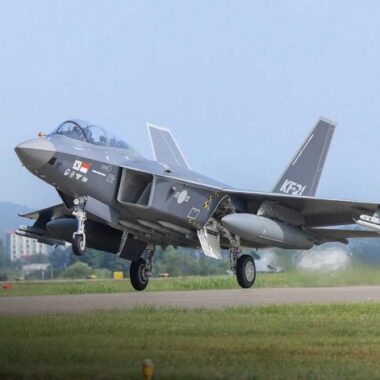
Built by Fincantieri and commissioned in 1985, the Giuseppe Garibaldi is approximately 180 meters long, displaces nearly 14,000 tons, and can carry up to sixteen aircraft. The ship was decommissioned in 2024 after a career marked by missions in the Mediterranean and off the coasts of Lebanon, Libya, and Somalia. It previously operated AV-8B Harrier II and onboard helicopters. As Indonesia does not possess short take-off and landing aircraft, the operation of fixed-wing aircraft would still be contingent on new acquisitions, hence the emphasis on embarked unmanned systems.
The receipt of the Italian ship is still described as a donation, but Jakarta will have to incur significant expenses to bring it up to the standards of the Indonesian navy TNI AL. According to estimates communicated in March, the initial investment would be around $450 million, including modernization, crew training, and transportation. Annual operating costs are estimated between $50 million and $80 million. In Italy, the book value of the Garibaldi is set at €54 million. The donation also allows Rome to avoid a dismantling cost estimated at around €18.7 million and recurring maintenance fees identified in 2025.
The production series Kızılelma is expected to be powered by the Ukrainian Ivchenko Progress AI-322F turbofan engine, replacing the AI-25TLT mounted on the first three prototypes. The first test example PT4 equipped with the AI-322F made its flight in May 2025. Baykar continues the qualification of this configuration alongside the preparation of production lines in Indonesia as stipulated in the agreement. The platform is designed for unmanned attack and interception missions, with anticipated deployment from surface vessels, aligning with integration plans within the air wing of the Garibaldi.
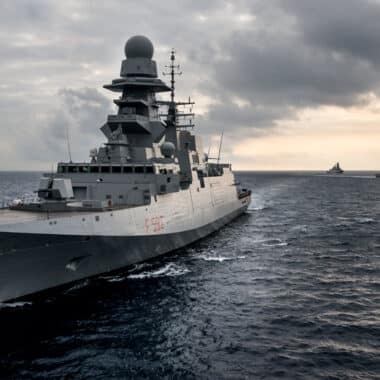
Recent tests have highlighted autonomous formation flights and firing campaigns with a range of national munitions. In March 2026, two shots were carried out using LGK-82 and TEBER-82 munitions developed by ASELSAN and ROKETSAN. The Kızılelma is also progressing on the integration of the Gökdoğan air-to-air missile, which has a claimed range of up to one hundred kilometers. Additionally, ASELSAN has integrated the FEWS U electronic warfare system into the Kızılelma, which has completed its first test flight and is intended to provide protection against adversary radars and other detection means.
From the Indonesian side, the Kızılelma are expected to be operated by the national navy and integrated into the air wing of the Giuseppe Garibaldi once the vessel is received. Jakarta authorities have indicated that the modernization of the ship will include extensive use of unmanned systems, in line with the announced acquisition. The establishment of production and maintenance capacity on Indonesian territory is included in the contract signed in Istanbul, with the declared objective of ensuring local fleet support. This organization should accompany the ramp-up of units and prepare for embarkation aboard the aircraft carrier.
In parallel, Turkey plans to embark the Bayraktar TB3 and the Kızılelma aboard the TCG Anadolu, providing an operational precedent for Indonesia. Once finalized, the donation would make Jakarta the second aircraft carrier operator in Southeast Asia after Thailand. In Rome, the government has defended the operation by emphasizing that it will strengthen relations with an ally while avoiding the cost of dismantling an obsolete asset. The Indonesian navy and its industrial partners will now need to align the pace of work with the delivery schedule announced starting in 2028.

